
The Most Common Illnesses / Conditions for each dog breed + Why You Should Get Life Insurance
Table of Contents
- Common Illnesses for Labrador Retrievers
- Common Illnesses / Conditions for French Bulldogs
- Common Illnesses for Cocker Spaniels (Show and Working)
- Common Illnesses for Dachshunds
- Common Illnesses for Golden Retrievers
- Common Illnesses for German Shepherd Dogs
- Common Illnesses for Pugs
- Common Illnesses for Cavalier King Charles Spaniels
- Common Illnesses for Border Collies
- Common Illnesses for Staffordshire Bull Terriers
- Common Illnesses for Common Mixed Breeds E.g. Cockapoos, Labradoodles etc.
Some dog breeds are naturally more susceptible to certain health conditions than others, whether that’s due to their size, body shape, genetics or lifestyle. From joint issues in larger breeds to breathing problems in flat-faced dogs and heart or neurological conditions in toy breeds, many illnesses start developing far earlier than most owners realise. This is why choosing the right level of cover (and choosing it early) is one of the most important decisions you can make as a dog owner.
Lifetime insurance gives you long-term protection against new illnesses, covering the kinds of ongoing treatments that can become expensive over your dog’s lifetime. Because many common conditions first appear in puppyhood or early adulthood, the best time to insure your pet is before any symptoms start. Once a condition is noted by a vet, any future treatment for it may be excluded and many dog insurance providers (including us!) won’t offer cover for an existing condition, which is why early cover is essential for peace of mind.
In this guide, we break down the most common illnesses for popular breeds, when they typically begin, and why early Lifetime cover is the safest way to protect both your dog’s health and your finances.
Common Illnesses for Labrador Retrievers
| Common Illnesses for Labradors | When do these conditions usually first appear? | Typical UK treatment cost without insurance *Average Estimate ONLY* |
| Hip & elbow dysplasia | 1-3 years | Typically £3,000–£8,000 per hip |
| Cruciate ligament problems | 1-3 years | £1,250–£3,000+ per knee |
| Obesity & arthritis | Middle age (5–8+) | Anywhere from £30–£180 per month depending on the medication required |
| Ear infections | Any age, but often from 1–2 years | £50–£400 for a typical ear infection treatment with no complications, with medications costing around £10-25. |
| Skin allergies | Any age, but often from 1–2 years | Medications can add up quickly, especially for bigger dogs (£150 to as much as £300+) |
Can you predict / spot early signs of these conditions?
Hip & Elbow Dysplasia
- Bunny-hopping gait when running
- Stiffness after rest or sleep
- Reluctance to jump into the car
- Slower to get up from lying down
- “Bunny sit” (legs splayed to one side when sitting)
- Clicking or popping sounds in joints
- Reduced enthusiasm on walks
- Hind-end swaying (“wobbly bum”)
- Lagging behind on exercise instead of pulling forward
Cruciate ligament problems
- Sudden lameness in one back leg (often after play)
- Limp that improves slightly with rest but returns
- Toe-touching (holding leg up but lightly touching the floor)
- Sitting with the affected leg sticking out to the side
- Difficulty rising from lying position
- Reduced willingness to jump or climb stairs
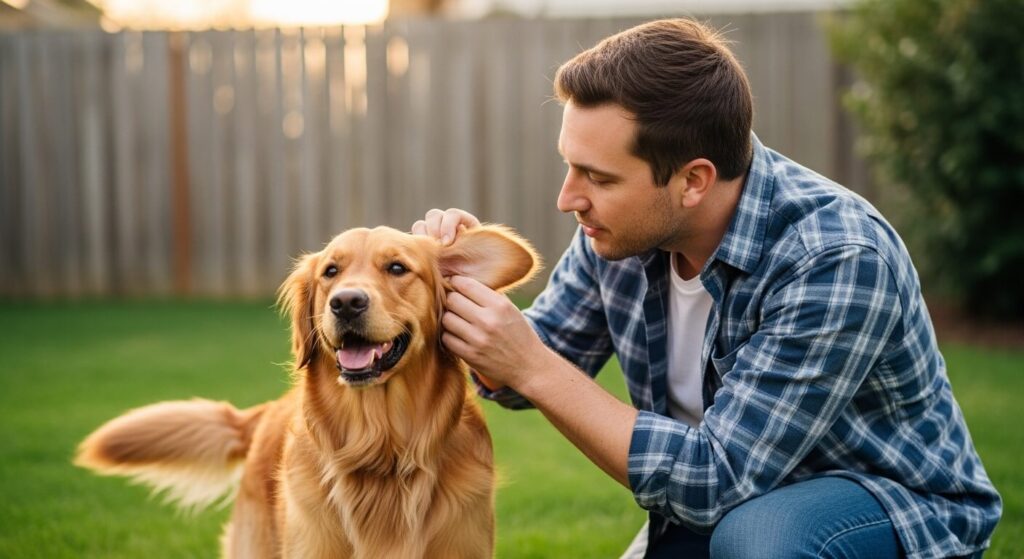
Ear infections
- Head shaking
- Scratching at ears
- Rubbing face along the carpet or furniture
- Bad smell from the ear (early hallmark sign)
- Redness just inside the ear
- Excess wax (brown, yellow or black)
- Heat or sensitivity around the ear
- Tilting head slightly to one side
Common Illnesses / Conditions for French Bulldogs
| Common Illnesses for French Bulldogs | When do these conditions usually first appear? | Typical UK treatment cost without insurance *Average Estimate ONLY* |
| BOAS (brachycephalic obstructive airway syndrome – breathing issues) | Often 2-3 years | BOAS surgery (airway, nostrils, soft palate) at referral: typically £2,500–£5,000 including imaging & hospitalisation |
| Skin allergies & ear infections | From 1 year onwards | £1,250–£3,000+ per knee |
| Eye ulcers | Typically between 3-6 years | Eye ulcer treatment can reach between £200 – £1,000+ in severe cases |
| Spinal problems (IVDD) | Typically between 3-6 years | Spinal surgery for IVDD: often £4,000–£7,500+, sometimes up to ~£10,000 |

Can you predict / spot early signs of these conditions?
BOAS (brachycephalic obstructive airway syndrome – breathing issues)
- Noisy breathing even when relaxed
- Snorting or snoring louder than normal
- Breathing effort seen in the belly
- Heat intolerance (panting heavily in mild warmth)
- Slow to recover after mild exercise
- Struggling during excitement
- Frequent gagging or choking
- Prefers to sleep sitting upright or with neck stretched
Eye ulcers
- Squinting one eye
- Blinking more than usual
- Keeping one eye slightly closed
- Rubbing the face with paws or on furniture
- Excess tear staining
- Clear or slightly cloudy discharge
- Sensitivity to light
Spinal problems (IVDD)
- Hesitation to jump on furniture
- Difficulty going up or down stairs
- Shivering or trembling (pain)
- Arched back (“hunched posture”)
- Low head carriage (trying to reduce back strain)
- Crying when picked up
- Reluctance to play
- Slower on walks
- Stiffness in the morning
Common Illnesses for Cocker Spaniels (Show and Working)
| Common Illnesses for Cocker Spaniels | When do these conditions usually first appear? | Typical UK treatment cost without insurance *Average Estimate ONLY* |
| Ear infections (otitis) | 1–3 years, often recurrent | Basic drops/ tablets: £20–£50 a month, but if consultation is needed, an average claim is £218.44 (Vetclick) |
| Skin allergies | 1–3 years, often recurrent | As skin allergies are often long-term, this can be around £200–£800+ a year, depending on severity |
| Cataracts and other eye disease | Usually 5–8+ years | Cataract surgery: many clinics quote £3,000–£5,000 depending on one vs both eyes and follow-up |
Can you predict / spot early signs of these conditions?
Skin allergies
- Paw licking
- Redness between toes
- Itchy ears (even before a full infection develops)
- Scratching face, muzzle or chin
- Small red bumps on belly or armpits
- Head shaking without obvious ear discharge
- Excessive grooming
- Rubbing face on carpet/furniture
Cataracts and other eye disease
- Cloudy, milky or blue-grey tinge in one or both eyes
- Eyes reflect light differently (unusual shine in photos)
- Hesitation in dim lighting
- Bumping into furniture or doorways
- Slower on walks, especially in the dark
- Avoiding stairs or needing more encouragement
Common Illnesses for Dachshunds
| Common Illnesses for Dachshunds | When do these conditions usually first appear? | Typical UK treatment cost without insurance *Average Estimate ONLY* |
| IVDD / slipped disc (back problems) | IVDD: commonly 3–7 years | Conservative IVDD treatment (no surgery) can still reach £200-£800 (imaging, medication, rest etc.). Spinal surgery + hospitalisation and rehab typically £4,000–£7,500, and can hit £10,000 in complex cases) |
| Obesity | 1–3 years, often recurrent | This can lead to arthritis or joint pain caused by excess weight – Anti-inflammatory medication can cost £20-60 a month |
| Dental disease | 6-8 years onwards | If caught early, routine scale and polish can cost between £100-£350 but if tooth extraction is required, it can cost anywhere from £500-£1,200 |

Can you predict / spot early signs of these conditions?
Dental disease
- Bad breath (often the first sign)
- Brown or yellow tartar on teeth
- Red or puffy gums
- Drooling more than normal
- Chewing more slowly than usual
- Preferring soft food
- Pawing at the mouth occasionally
Common Illnesses for Golden Retrievers
| Common Illnesses for Golden Retrievers | When do these conditions usually first appear? | Typical UK treatment cost without insurance *Average Estimate ONLY* |
| Hip & elbow dysplasia | 1-3 years, sometimes noticed later | Joint surgeries as per Labs: Anywhere from £2000-£8000 per affected joint. |
| Cruciate ligament injury | 1–3 years, often recurrent | £1,250–£3,000+ per knee |
| Arthritis | 5+ years | £15–£80 per year for long-term medication / monitoring |
| Cancer (lymphoma, hemangiosarcoma, mast cell tumours) | 7-10+ years | Cancer work-up and treatment (imaging, surgery, chemotherapy) is often £500–£2000 and multi-drug chemo protocols alone can be £3,000–£5,000+ |
| Skin disease | 6 months – 1 year old | Medications can add up quickly, especially for bigger dogs (£150 to as much as £300+) |
Can you predict / spot early signs of these conditions?
Early Signs of Arthritis
- Stiffness when getting up after rest
- Slow to stand in the morning
- Reluctance to jump on furniture or into the car
- Slight limp that improves as they “warm up”
- Reduced enthusiasm on walks
- Taking longer to settle after exercise
Cancers
Lymphoma
- Enlarged lymph nodes (neck, armpits, behind knees, under jaw)
- Swollen glands with NO pain
- Lethargy that comes and goes
- Reduced appetite
- Increased thirst
- Sudden, mild weight loss
- Dull coat
Hemangiosarcoma (HSA)
- Tiring more easily
- Pale gums after exercise
- Occasional weakness
- Reduced stamina
- Off food for a day or so
Mast Cell Tumours (MCT)
- Belly or groin lumps that come and go
- Lump on or under the skin
- Lump that changes size daily (classic sign)
- Lump that becomes red or inflamed when touched
- Itching at the lump site
- Belly or groin lumps that come and go
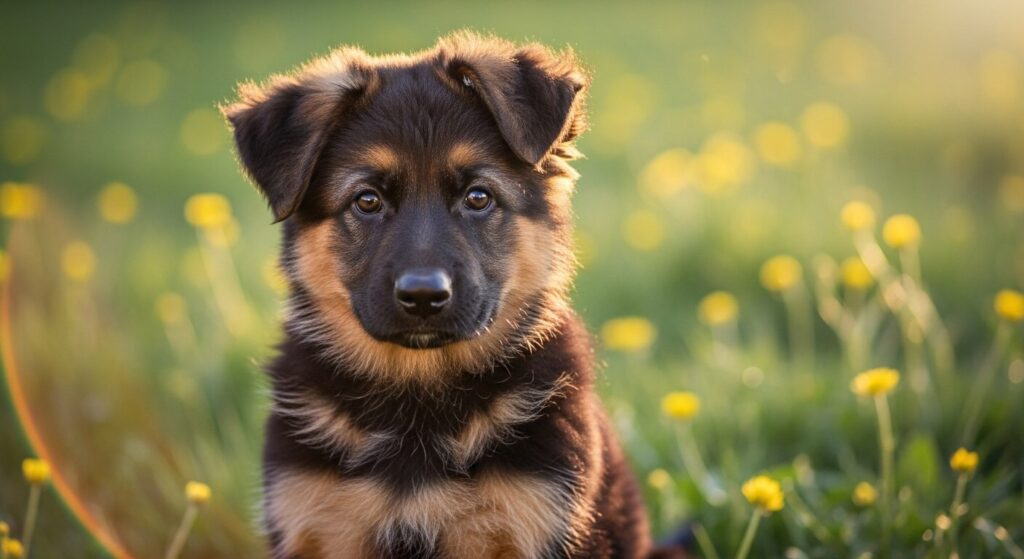
Common Illnesses for German Shepherd Dogs
| Common Illnesses for German Shepherds | When do these conditions usually first appear? | Typical UK treatment cost without insurance *Average Estimate ONLY* |
| Hip & elbow dysplasia | From 1–3 years | As with other large breeds, anywhere from £2000-£8000 per affected joint. |
| Lumbosacral disease | 5-8 years usually, but can appear at 3-5 years old in working-line / highly active German Shepherds | Mild to moderate case (conservative management only): Expect £500-£1,500 in the first year (consults, meds, physio/hydrotherapy, diet/weight control). Severe case requiring surgery: Probably in the range £5,000-£10,000+, depending on diagnostics, surgery type, size of dog, hospital stay, rehab. |
| Degenerative myelopathy | 5-8 years | For early to moderate stage management (physio, modest equipment, regular check-ups) you might expect £300-£800 per year initially. For advanced stage management (frequent physio/hydro, major equipment, daily care aids, increased vet monitoring) costs may exceed £1,000-£2,000+ per year. |
| Ear Infections | Any time | Basic drops/ tablets: £20–£50 a month, but, as mentioned above, if consultation is needed, an average claim is £218.44 (Vetclick) |
| Skin disease | 6 months – 1 year old | Medications can add up quickly, especially for bigger dogs (£150 to as much as £300+) |
Can you predict / spot early signs of these conditions?
Lumbosacral disease
- Hesitation jumping into the car
- Difficulty rising from lying down
- Hind-end weakness that comes and goes
- Shortened stride with the back legs
- Reluctance to run, twist or turn
- Slower reaction when asked to sit or lie down
Degenerative myelopathy
- Hind-end wobble or swaying
- Dragging back toes (look for worn nails)
- Slight knuckling of the back paws
- Difficulty rising, especially on slippery floors
- Stumbling on back legs occasionally
Common Illnesses for Pugs
| Common Illnesses for German Shepherds | When do these conditions usually first appear? | Typical UK treatment cost without insurance *Average Estimate ONLY* |
| BOAS (breathing issues) | Usually early, 1–3 years | Owners should budget £1,000–£5,000+, depending on severity, diagnostic requirements (e.g., CT scan, specialist anaesthesia), and post-operative care. |
| Eye ulcers / proptosis | Any age, often younger (between 6 months – 2 years) due to big, exposed eyes | Eye ulcer treatment and emergency globe surgery can range from £200–£1000 depending on severity and need for grafting (hundreds to several thousand). |
| Skin fold infections, allergies | Anywhere from 6 months to 2 years | Mild case (cleaning and topical treatment only) – £50-£150 More serious or recurrent case (requiring vet prescription, antibiotics/antifungal, follow-up visits) – £200-£400+ |
Can you predict / spot early signs of these conditions?
Skin Fold Infections
- A slight smell coming from the face folds
- Redness between wrinkles (especially the nose fold)
- Dampness or moisture trapped in folds
- Small amounts of brown or creamy discharge
- Dog rubbing their face on carpets or furniture
- Increased licking around the tail fold or groin area

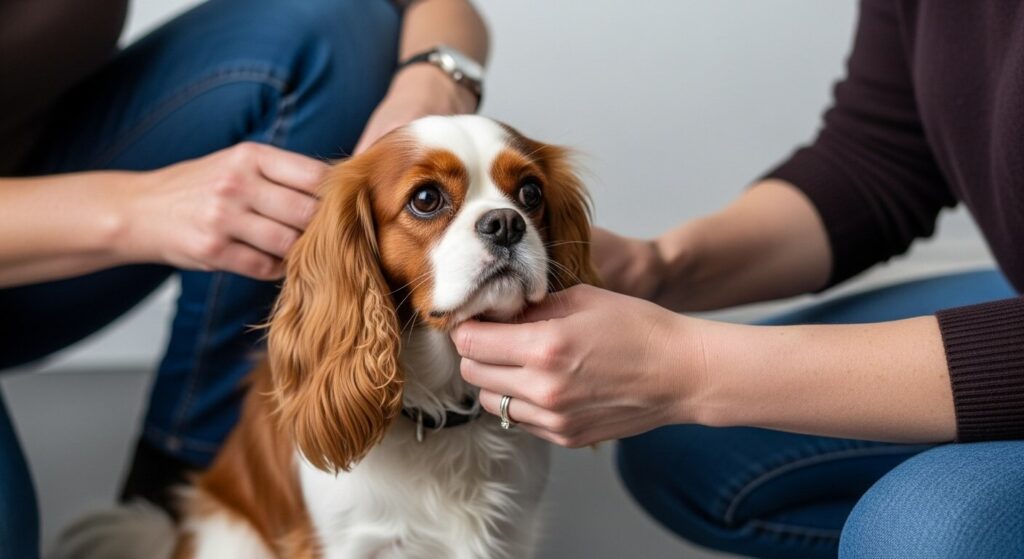
Common Illnesses for Cavalier King Charles Spaniels
| Common Illnesses for Cavalier King Charles Spaniels | When do these conditions usually first appear? | Typical UK treatment cost without insurance *Average Estimate ONLY* |
| Mitral valve disease (MVD – heart valve problem) | Heart murmur from MVD: often detected 3–7 years, may progress with age | Early/mild detected (murmur but no clinical signs; monitoring only) – £200-£500/year (check-ups + diagnostics) Moderate disease (medications started, regular visits) – £500-£1,000/year Advanced stage (heart failure signs, multiple medications, frequent visits) – £1,000-£2,000+ per year |
| Ear infections | Ear issues: 1–3 years | Basic drops/ tablets: £20–£50 a month, but, as mentioned above, if consultation is needed, an average claim is £218.44 (Vetclick) |
| Syringomyelia (neurological issue) | Syringomyelia: variable, often young adulthood (1-3 years) | Around £1,000 just for diagnosis in many cases. Management of the condition is an estimated £300-£1,000/year depending on severity, dog size, how many drugs are needed. |
Can you predict / spot early signs of these conditions?
Mitral valve disease (MVD – heart valve problem)
- A new heart murmur picked up at routine vet checks (often the very first sign)
- Slight reduction in energy
- Slower on walks
- Mild coughing after excitement, exercise or first thing in the morning
- Increased resting or napping
Syringomyelia (neurological issue)
- Scratching at the neck, shoulder or ear without touching the skin (air scratching)
- Sensitivity when touching the head or neck
- Yelping when picked up under the chest
- Sudden scratching during excitement or walking
- Rubbing face along furniture
Common Illnesses for Border Collies
| Common Illnesses for Border Collies | When do these conditions usually first appear? | Typical UK treatment cost without insurance *Average Estimate ONLY* |
| Hip dysplasia | 6-12 months | Although Border Collies are more of a medium sized breed, hip/elbow surgery can still be £1000+ per joint. |
| Cruciate injury | 6-8 years | £1,250–£3,000+ per knee |
| Epilepsy | 1-4 years | Lower end (well-controlled seizures, single medication) – £200-£400/year Moderate case (frequent seizures, higher dose, two medications) – £400-£800/year Complex case (multiple meds, frequent monitoring) – £800-£1,200+ per year |
| Collie eye anomaly / other eye issues | 6-8 weeks | No specific treatment for this condition, but it can lead to other retinal issues, which can cost several thousands. |
Common Illnesses for Staffordshire Bull Terriers
| Common Illnesses for Border Collies | When do these conditions usually first appear? | Typical UK treatment cost without insurance *Average Estimate ONLY* |
| Skin allergies & atopy | 1-3 years | Mild case (cleaning and topical treatment only) – £50-£150 More serious or recurrent case (requiring vet prescription, antibiotics/antifungal, follow-up visits) – £200-£400+ |
| Cruciate ligament rupture | 2-8 years | £1,250–£3,000+ per knee |
| Hip & elbow dysplasia | 5-12 months | Although Bull Terriers are more of a medium sized breed, hip/elbow surgery can still be multiples thousands per joint. |
Common Illnesses for Common Mixed Breeds E.g. Cockapoos, Labradoodles etc.
| Mixed Breeds often share issues of parent breeds, such as: | When do these conditions usually first appear? | Typical UK treatment cost without insurance *Average Estimate ONLY* |
| Hip, elbow and cruciate issues | Depends heavily on size & parental breeds. Hip/elbow dysplasia often shows signs from 1-3 years for medium/large mixes. Cruciate ligament rupture often from middle age (5-8 yrs), though may occur earlier with strain/obesity. | Surgery for hip replacement etc in large mixes: £4,000+ per hip • Cruciate repair: £1,500-£4,000+ • Conservative management: £500-£1,000+/year |
| Allergies | Mixed breeds may show onset around the same time as purebreds: 6 months to 3 years is common. | Mild/moderate case: around £300-£600 in first year. |
| Ear problems | Many mixed breeds with floppy ears or allergy predisposition may begin from 1-2 years or earlier, if ears are not well managed or if there’s underlying allergy. | Basic drops/ tablets: £20-£50 a month, but, as mentioned above, if consultation, an average claim is £218.44 (Vetclick) |
| Some brachycephalic crosses still have BOAS-type issues | If a mixed breed inherits brachycephalic traits, symptoms often start very young (puppy/juvenile phase) – e.g., from 6 months or younger. | As mentioned above, owners should budget £1,000-£5,000+, depending on severity, diagnostic requirements and post-operative care. |
Protect your dog from the illnesses they’re most likely to face
Every breed has its own set of health risks, and many of these conditions can appear far earlier than owners expect. With Lifetime insurance, you’re protected year after year, even if your dog develops a long-term or recurring condition. Give yourself peace of mind and make sure your dog gets the care they need without unexpected vet bills.
Get covered today and protect your dog’s health for life.