Yorkshire Terrier Breed Information and Advice

Table of Contents

Don’t let the size fool you. Yorkshire Terriers are bold, sharp, and self-possessed in a way that takes many new owners by surprise. Confident, affectionate, and frequently stubborn, they’ve been one of the UK’s most popular small breeds for well over a century, and their combination of terrier spirit and loyalty means it’ll almost certainly stay that way.

They’re also a breed with specific health needs that owners should understand before bringing home. Dental disease, joint problems, tracheal collapse, and skin sensitivities are all well-documented in the Yorkie, and several of these are ongoing rather than one-off conditions. For most Yorkshire Terrier owners, good insurance isn’t an afterthought: it’s part of responsible ownership from day one.

This guide covers everything you need to know: the breed’s history, character, health conditions, care requirements, and how Muddy Paws can help protect your Yorkshire Terrier throughout their life.


Yorkshire Terrier facts

The Yorkshire Terrier has a working-class origin that sits in sharp contrast to its modern reputation as a pampered companion. The breed was developed in Yorkshire and Lancashire during the 19th century, primarily by mill and mine workers who needed a small, tough dog capable of catching rats in textile mills and coal mines. Several terrier breeds contributed to the Yorkie’s development, including the now-extinct Clydesdale Terrier and the Paisley Terrier.

The Kennel Club formally recognised the Yorkshire Terrier in 1886. By then, the breed had already begun its transition from working dog to fashionable Victorian companion, a shift that would continue for the next century and a half. Today the Yorkie is one of the most popular toy breeds in the UK and worldwide.

The term ‘Teacup Yorkie’ is sometimes used to describe very small Yorkshire Terriers, but it is not a recognised variety and carries additional health risks associated with extreme miniaturisation. Any breeder advertising ‘teacup’ or ‘micro’ Yorkies should be approached with caution.

Quick Yorkshire Terrier facts

  • Temperament: Bold, affectionate, alert, stubborn, loyal
  • Lifespan: 12-16 years
  • Price: £500–£2,500+
  • Size: Toy
  • Height: 18-23cm
  • Weight: Up to 3.2kg
  • Coat: Fine, silky, long; no undercoat
  • Colours: Blue and tan, black and tan, blue and gold, black and gold
  • Grooming: Daily brushing for long coats; many owners opt for a shorter trim
  • Exercise needs: 30–60 minutes per day
  • Good with children? Better suited to older, calmer children due to small size
  • Good with other pets? Generally yes, with early socialisation

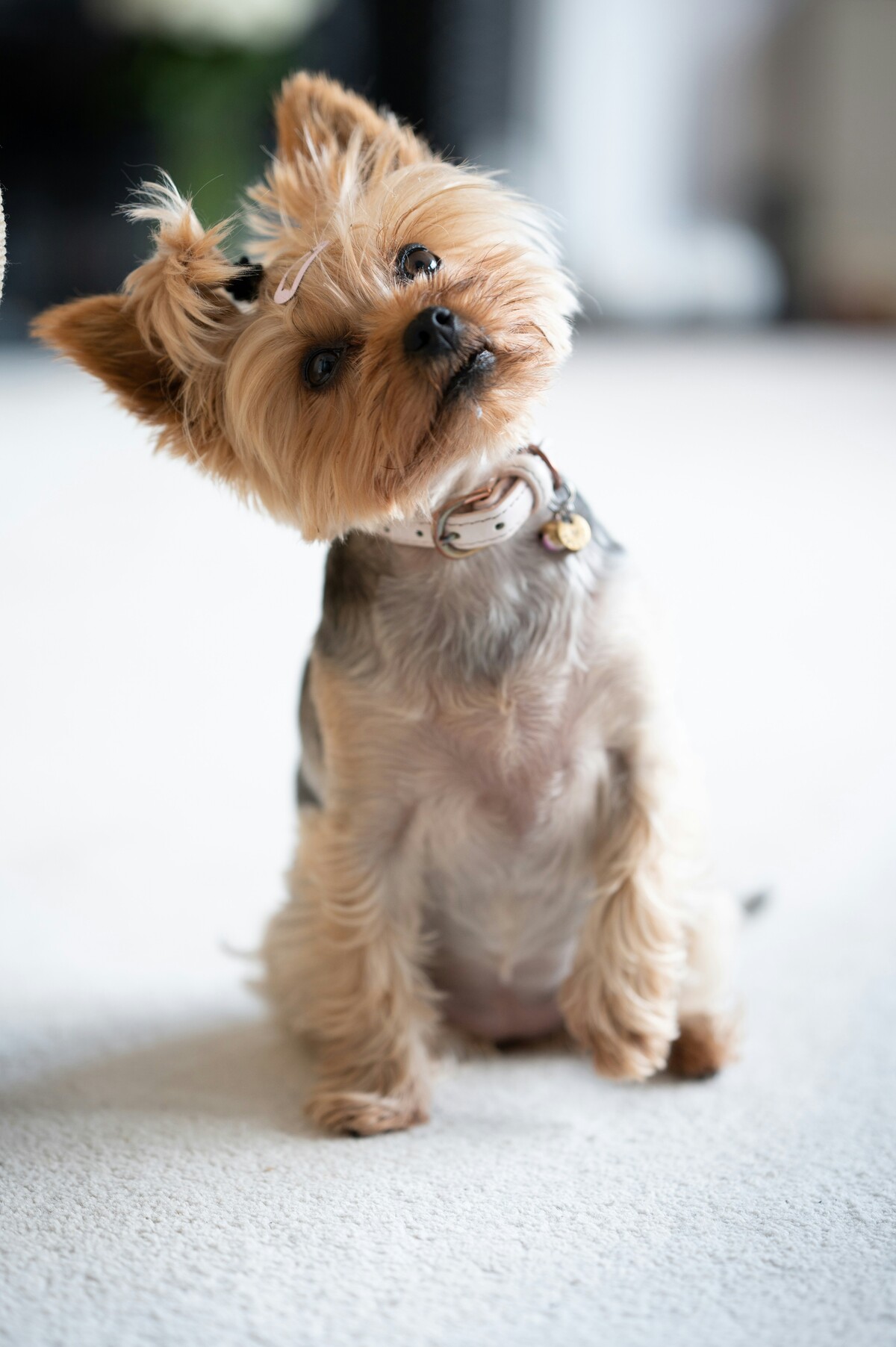
yorkshire terrier dog insurance - yorkshire terrier tilting its head

yorkshire terrier pet insurance - yorkshire terrier with a tennis ball in its mouth

Why choose Muddy Paws for Yorkshire Terrier insurance?


The cost of owning a Yorkshire Terrier

  • Purchase price from a reputable breeder: £500–£2,500+
  • Rehoming a rescue: typically £100–£300
  • Initial vaccinations, microchipping and neutering (if not done by breeder)
  • Beds, crate, harness (avoid collars), grooming tools, food bowls, and toys
  • High-quality food, measured portions
  • Routine veterinary care: annual vaccinations, parasite prevention, and regular dental checks
  • Professional grooming every 6–8 weeks (for owners keeping a short trim)
  • Dog walking or daycare as needed — our guides to choosing a pet sitter and dog hotels and daycares can help you find the right option
  • Pet insurance


The Yorkie’s lifespan of up to 16 years means veterinary costs can accumulate over a long time. Conditions like allergic skin disease, seizure disorders, tracheal collapse, and joint problems are recurring and require regular vet input. Thinking carefully about unexpected costs before they arise is worthwhile for any pet owner, and particularly so for a breed like this.

A lifetime policy is the type of cover most appropriate for Yorkshire Terrier owners. Because many of the breed’s most common conditions — hypersensitivity, seizure disorders, joint problems — are ongoing, a time-limited policy that only covers each condition for 12 months from when it first presents will frequently leave you without cover when you need it. A lifetime policy refreshes the vet fee limit each year and continues to cover conditions as they recur.

Common health conditions in Yorkshire Terriers

Small breeds tend to have crowded mouths, with teeth packed more tightly together than the jaw comfortably accommodates. This creates conditions where tartar builds up faster, gum disease sets in earlier, and teeth are more likely to loosen or be lost prematurely.

The consequences go beyond the mouth. Dental disease has been linked to wider health problems in dogs, including heart and kidney issues, through bacteria entering the bloodstream. Establishing a tooth-brushing routine from puppyhood and scheduling regular dental checks with your vet are among the most impactful things you can do for a Yorkie’s long-term health. Professional descaling under anaesthetic is sometimes required, which carries both a cost and an anaesthetic risk that increases with age.

Hypersensitivity — the immune system reacting to triggers that most dogs tolerate without issue — is the most commonly claimed condition in the breed. Atopy is chronic allergic skin disease, and it appears separately as the third most claimed condition. The two often overlap.

Affected dogs typically show persistent itching, skin redness, recurrent ear infections, and in some cases digestive upset. Triggers include environmental allergens (pollen, grass, dust mites), food ingredients, and contact allergens. The condition is managed rather than cured: identifying triggers, reducing exposure where possible, and using prescription medication as needed are all part of long-term management. Pet insurance can make a significant difference to the ongoing costs of allergy treatment.

Tracheal collapse is a condition specific to small and toy breeds, and Yorkshire Terriers are among those most commonly affected. The trachea (windpipe) is formed from C-shaped rings of cartilage. Particularly in small breeds, these rings weaken over time, causing the trachea to flatten or collapse during breathing.

The characteristic sign is a dry, harsh cough, often triggered by excitement, exercise, or pulling against a collar. Mild cases can be managed with lifestyle adjustments — avoiding collar pressure (a harness is strongly recommended for Yorkies), keeping the dog lean, and reducing exposure to smoke or strong scents. More severe cases may require medication or specialist respiratory care.

Luxating patella — a kneecap that slips out of its normal position — is common across small and toy breeds like the Yorkshire Terrier. Mild cases may cause only occasional skipping or momentary lameness; more severe cases cause persistent pain and reduced mobility and may require surgery.

The condition is graded on a scale of one to four. Grade one and two luxations can often be monitored and managed conservatively; grades three and four typically require surgical correction. Untreated luxating patella increases the risk of cruciate ligament damage over time.

Legg-Calvé-Perthes disease involves spontaneous degeneration of the femoral head (the ball of the hip joint) due to reduced blood supply during development. It typically presents in young dogs, usually between six months and a year old, causing progressive lameness and pain in the affected hip.

Treatment is surgical, involving the removal of the affected femoral head (femoral head ostectomy or FHO). Outcomes are generally good with appropriate post-operative physiotherapy and rehabilitation.

Seizure disorders are the second most commonly claimed condition in Yorkshire Terriers. In some dogs the cause is idiopathic epilepsy (of unknown origin); in others, seizures may result from underlying metabolic or neurological conditions.

Many dogs with seizure disorders can be successfully managed with medication, allowing them to live comfortable lives. This typically requires lifelong treatment, regular veterinary monitoring, and dose adjustments over time. Keeping a record of each seizure — its duration, character, and context — is useful for vets.

Pelvic limb conditions (anything affecting movement and function in the back legs) are the fourth most commonly claimed category, and osteoarthritis appears as the fifth. In Yorkshire Terriers, these can arise as a consequence of luxating patella, Legg-Calvé-Perthes disease, or simply age-related joint degeneration.

Management typically involves a combination of pain medication, weight control, and physical support — including physiotherapy and hydrotherapy where appropriate. For a small dog, maintaining a healthy body weight throughout life is one of the most practical ways to reduce joint strain.

Progressive Retinal Atrophy (PRA) can occur in Yorkshire Terriers, causing gradual deterioration of vision over time. Dry eye (KCS) and hereditary cataracts are also seen in the breed. Any changes in your dog’s eyes — cloudiness, discharge, or altered behaviour in low light — should be assessed by a vet promptly.

A portosystemic shunt is an abnormal blood vessel that allows blood to bypass the liver, meaning it is not properly filtered. Symptoms in puppies and young dogs can include poor growth, neurological signs, and digestive issues. The condition can sometimes be corrected surgically, though medical management is used in some cases.

yorkshire terrier insurance - yorkshire terrier looking upwards

Yorkshire Terrier temperament

Yorkshire Terriers were bred to work, and that heritage still shows up clearly in their character today. These are not delicate lap dogs — they are alert, determined, and confident, with a terrier’s instinct to investigate, chase, and hold their ground. Many Yorkie owners describe sharing their home with a dog who is convinced they are considerably larger than they actually are.

Here’s what the breed is actually like to live with:

  • Bold and self-assured: Yorkies carry themselves with an assurance that can catch people off guard. They are not typically timid or nervous, and they rarely back down from something that catches their interest — whether that’s a strange noise, an unfamiliar dog, or a squirrel. This confidence is part of their charm, but it also means they need clear, consistent guidance from puppyhood. Without it, they tend to develop bad habits that are harder to address later.
  • Affectionate with their people: Behind the terrier bravado is a dog that bonds closely with its family. Yorkies like to be near the people they know, often following their owner from room to room and preferring company to solitude. Separation anxiety can be a real issue in the breed — Yorkies left alone for long periods regularly may develop nuisance barking, destructive behaviour, or signs of distress.
  • Alert and vocal: Yorkshire Terriers are watchful dogs that will bark at visitors, sounds, and anything they consider worth reporting. This makes them effective little watchdogs, but it’s also something to manage from an early age. Training can reduce excessive barking without eliminating the breed’s natural alertness.
  • Stubborn and independent: Yorkies are intelligent, but not always compliant; they are capable learners who can also simply choose not to cooperate. Positive, reward-based training works well with the breed, but anything involving force or frustration does not. Patience and consistency are more useful than persistence alone.
  • Better suited to calmer households: Yorkshire Terriers are not well matched with very young children. Their small size makes them vulnerable to accidental injury, and they can become snappy if handled roughly or startled. They tend to suit households with older children, adults, or older people. Many are kept as companions by owners who live alone or in smaller properties.
  • Lively, but not demanding of exercise: Unlike many working breeds, Yorkies don’t need hours of daily activity to stay content. They are energetic and enjoy walks, but their exercise requirements are modest relative to their energy levels. A couple of short walks and some indoor play each day is usually sufficient for most adult Yorkies.

Yorkshire Terrier care guide

Yorkshire Terriers have a fine, silky, single-layer coat that grows continuously rather than shedding seasonally. This means low shedding, but it also means the coat requires regular attention to stay tangle-free and healthy.

Full-length coat: If kept long, a Yorkie’s coat needs daily brushing with a fine-toothed metal comb or pin brush. Without daily attention, the fine hair mats quickly, particularly behind the ears and under the legs. Many show Yorkies have their coat tied up at the top of the head in a topknot, for function and fashion reasons.

Shorter trim: Most owners opt for a shorter ‘puppy cut’ — trimming the coat to a uniform length of an inch or two all over. This is considerably easier to maintain and requires brushing two to three times per week rather than daily. Most owners visit a professional groomer every six to eight weeks for a trim. Our podcast on dog grooming with Lucia Carne has useful practical guidance on establishing a good routine.

Eyes and face: The hair around a Yorkie’s face grows over the eyes if left untrimmed. Regular trimming is important to prevent eye irritation, and checking for discharge or redness should be part of the daily routine.

Ears: Check and clean weekly. Yorkies can grow hair inside the ear canal, which traps wax and debris and increases the risk of infections. Many groomers routinely pluck this hair as part of a regular groom.

Teeth: Daily brushing is the gold standard; three times per week is the minimum recommended frequency. Given how prone the breed is to dental disease, this is one of the most useful habits a Yorkshire Terrier owner can build.

Nails: Trim monthly or ask your groomer to do this as part of a regular appointment.

Feed a complete, high-quality dog food appropriate for a toy breed. Yorkshire Terriers have small stomachs and can be prone to low blood sugar (hypoglycaemia), particularly as puppies. Very small Yorkies may need feeding three or four times a day initially, rather than twice.

Portion control is important throughout their life. Despite their diminutive size, Yorkies can gain weight if portions aren’t managed carefully, and extra weight puts additional strain on already-vulnerable joints. Factor treats into the daily allowance rather than adding them on top of meals.

Some Yorkshire Terriers have food sensitivities as part of their hypersensitivity profile. If your Yorkie is showing skin or digestive symptoms, a dietary trial under veterinary supervision may be worthwhile to rule out food allergies as a contributing factor.

Yorkshire Terriers need daily exercise, but their requirements are relatively modest. Around 30 to 60 minutes of activity per day is typically sufficient for an adult Yorkie, split across a couple of walks. They are energetic enough to enjoy more if offered, but they don’t need extended daily outings to stay mentally and physically healthy.

Because of the breed’s risk of tracheal collapse, a harness is strongly recommended over a collar for all lead walking. Avoid letting your Yorkie pull against a lead — a properly fitted harness eliminates the pressure on the trachea that pulling on a collar creates.

Keep walks manageable in hot weather. Yorkshire Terriers can overheat more quickly than larger breeds, and their small size makes them more vulnerable to temperature extremes in general.

As your Yorkie ages, watch for any signs of stiffness, lameness, or reluctance to exercise — these can be early indicators of joint problems that are worth catching and addressing early. Staying active with your dog in a way that suits their health and life stage makes a real difference over time.

Yorkshire Terriers are bright dogs who learn quickly, when they want to. They have a streak of independence characteristic of terrier breeds, and they can become selectively obedient if training isn’t consistent and well-rewarded from the start.

Positive reinforcement with treats and praise works well. Short, regular training sessions are more productive than long ones. Early socialisation is worthwhile — a Yorkie that has been well socialised with other dogs, people, and environments from puppyhood is a more settled and manageable adult than one that hasn’t.

Mental stimulation matters for small breeds just as much as physical exercise. Puzzle feeders, scent games, and short training sessions all provide engagement and help prevent the boredom that tends to amplify the breed’s more demanding traits — including excessive barking.

yorkshire terrier dog insurance - yorkshire terrier looking out the window

We’re proud to hold an Excellent rating on Feefo, based on reviews from verified customers. Here’s what some of them have had to say about their experience with Muddy Paws.

  • Gold star service

    I received gold star service when my dog Riley needed surgery last year. Very friendly, no hassle service. Took the worry out of a stressful time.
    Michael
    ⭐️⭐️⭐️⭐️⭐️⭐️
  • Excellent service

    Excellent service, all enquiries followed up straight away. Great communication throughout the process.
    Kerri
    ⭐️⭐️⭐️⭐️⭐️
  • Protect your best friend

    Easy to apply online, fast and covers all the things you’ll need to protect your best friend
    David
    ⭐️⭐️⭐️⭐️⭐️

Frequently asked questions about Yorkshire Terriers and insurance

They can be, in the right household. Yorkies are affectionate, loyal, and suited to a range of living situations — including flats and smaller homes. They’re not the best fit for households with toddlers or very boisterous children, but with older or calmer children and adults they can be wonderful companions. They’re also a reasonable choice for first-time owners, provided those owners commit to early training and understand the breed’s stubborn streak.

They’re a generally long-lived and resilient breed, but they do have a number of documented health vulnerabilities. Dental disease, allergic skin conditions, tracheal collapse, luxating patella, Legg-Calvé-Perthes disease, seizure disorders, and joint problems are all seen with reasonable frequency in the breed. Many of these require ongoing management, which is why pet insurance — particularly a lifetime policy — is worth taking seriously from the outset.

As soon as you bring them home. Taking out cover before any health conditions develop gives you the broadest possible protection throughout your dog’s life. Pre-existing conditions — those that develop before you take out a policy — are typically excluded, so the earlier you start, the better.

A lifetime policy. Many of the Yorkie’s most common conditions are recurring and require management over months or years. A time-limited policy, which only covers a condition for 12 months from when it first appears, will leave you without cover for ongoing conditions. A lifetime policy continues to cover conditions year after year, provided the policy is renewed.

Premiums depend on your dog’s age, your location, and the level of cover you choose. Getting a free quote from Muddy Paws takes just a few minutes.

From a reputable breeder, expect to pay between £500 and £2,500, or more. Be wary of unusually cheap puppies, particularly from breeders advertising ‘teacup’ or ‘micro’ Yorkies — these can indicate dogs bred for extreme miniaturisation, which carries additional health risks.

More than their size might suggest. Long coats require daily brushing, so most owners choose to keep the coat in a shorter trim, which reduces the brushing commitment to a few times per week. Either way, regular professional grooming every six to eight weeks is the norm. Daily dental hygiene is particularly important for this breed.

A harness is strongly recommended. Yorkshire Terriers have a known predisposition to tracheal collapse, and pressure on the throat from a collar can worsen symptoms or contribute to the condition’s progression. A properly fitted harness that distributes pressure across the chest is a sensible choice for all Yorkshire Terriers, regardless of whether they currently show any signs of tracheal issues.

They can be, but they’re better suited to calmer households with older children. Their small size makes them vulnerable to accidental injury from rough handling or being dropped, and they can become snappy if startled or handled without care. With sensible supervision and children who understand how to behave around small dogs, Yorkies can thrive in a family setting.

For short periods, but not regularly for extended stretches. Yorkies form close bonds with their owners and can develop separation anxiety when left alone frequently. This often manifests as persistent barking, which can become a problem for owners and neighbours alike. Building up alone time gradually from puppyhood helps, as does ensuring your Yorkie has enough mental stimulation and company during the day.

Not completely, though they are often marketed as such. Because Yorkies have a fine, single-layer coat with minimal shedding, they produce less airborne dander than many breeds, which can make them more tolerable for some allergy sufferers. However, no dog breed is truly hypoallergenic, and individual reactions vary.

Yorkshire Terriers are one of the longer-lived dog breeds, with a typical lifespan of 12–16 years. Some live even longer with good care. Dental health, weight management, regular vet check-ups, and prompt attention to any health changes all contribute to a longer and more comfortable life.

Monthly payments are available, making it easier to budget for your Yorkshire Terrier’s cover without a large upfront cost.

Vet fees for diagnosing and managing conditions including tracheal collapse are covered under Muddy Paws policies, subject to the annual vet fee limit and policy terms, provided the condition first presents after the policy start date. Please refer to your policy documentation for full details.

yorkshire terrier pet insurance - yorkshire terrier sat on street path

Ready to protect your Yorkshire Terrier?

yorkshire terrier insurance - yorkshire terrier side profile