Cavalier King Charles Spaniel Breed Information and Advice

Table of Contents

With their silky coats, expressive dark eyes, and a special ability to sense exactly when you need company, Cavaliers have a way of making themselves completely indispensable. They are companion dogs in the truest sense: wherever you are, they want to be.

That warmth and sensitivity is everything that makes a Cavalier wonderful to live with. It also means that when their health is affected — and prospective owners should know that the Cavalier is a breed with some serious, well-documented health vulnerabilities — it matters deeply to them and to you. Cavalier King Charles Spaniel dog insurance isn’t simply a sensible precaution for this breed. For many owners, it becomes one of the most important decisions they make.

This guide covers everything you need to know: the breed’s history, character, health conditions, care needs, and how Muddy Paws can help protect your Cavalier throughout their life.


Cavalier King Charles Spaniel facts

The Cavalier King Charles Spaniel has one of the more fascinating histories of any British breed. Its ancestors can be traced to small toy spaniels that were popular in royal courts as far back as the 16th and 17th centuries. King Charles II was so devoted to his spaniels that it is said he issued a royal decree allowing them access to any public building in the land. Naturally, it’s from him they get their name.

Over the following century, crosses with flat-faced Asian breeds such as the Pug and the Japanese Chin gradually produced a shorter-nosed dog, which became known as the King Charles Spaniel. In 1926, an American named Roswell Eldridge offered prize money at Crufts for breeders who could produce dogs that more closely resembled the longer-muzzled spaniels seen in 17th century paintings. The resulting programme eventually produced the Cavalier King Charles Spaniel as a distinct breed, officially recognised by the Kennel Club in 1945.

However, the Cavalier King Charles Spaniel and the King Charles Spaniel (also called the English Toy Spaniel) are two distinct, separate breeds. The King Charles Spaniel has a more pronounced flat face and domed skull, similar to a Pug; the Cavalier has a longer muzzle and a flatter skull. This guide focuses on the Cavalier King Charles Spaniel.

Cavalier King Charles Spaniel facts

  • Kennel Club group: Toy
  • Temperament: Affectionate, gentle, adaptable, sociable, eager to please
  • Lifespan: 9-14 years
  • Price: £1,200–£3,000+
  • Size: Small
  • Height: 31-33cm
  • Weight: 5.4–8kg
  • Coat: Silky, medium-length, slight wave; feathering on ears, chest, legs and tail
  • Colours: Blenheim (chestnut and white), tricolour, black and tan, ruby
  • Grooming: Brush 3–4 times per week; bathe monthly
  • Exercise needs: At least 1 hour per day
  • Good with children? Yes — patient and gentle
  • Good with other pets? Yes — typically friendly and sociable

pet insurance - cavalier king charles spaniel laying on bed

pet insurance - cavalier king charles spaniel lying on blanket

Why choose Muddy Paws for Cavalier King Charles Spaniel insurance?


The cost of owning a Cavalier King Charles Spaniel

  • Purchase price from a reputable breeder: £1,200–£3,000+
  • Rehoming a rescue: typically £150–£400, often including vaccinations, microchipping, and neutering
  • Initial vaccinations, microchipping, and neutering (if not done)
  • Beds, crate, leads, collar, grooming tools, food bowls and toys
  • High-quality food, carefully portioned
  • Routine veterinary care: annual vaccinations, parasite prevention, dental checks — for a breed like the Cavalier, those regular vet visits are not optional
  • Cardiac monitoring — many Cavalier owners schedule annual or bi-annual heart checks, particularly from middle age
  • Professional grooming, periodically
  • Dog walking, daycare or boarding when needed — our guides to choosing the right pet sitter and what to look for in a dog daycare can help
  • Pet insurance


Preparing financially for the unexpected is wise for any pet owner. For Cavalier owners, it’s particularly pressing. The combination of near-universal mitral valve disease, significant rates of syringomyelia, dry eye, and other conditions means veterinary costs for this breed are not a remote possibility, but, for most owners, a reality.

Common health conditions in Cavalier King Charles Spaniels

The mitral valve is one of four valves in the heart; it controls blood flow between two of the heart’s chambers. In Cavaliers, this valve is prone to degeneration over time — a condition known as myxomatous mitral valve disease (MMVD) — which causes it to become thickened and less effective, allowing blood to leak back through the valve with each heartbeat.

The first sign is typically a heart murmur, detected through a stethoscope during a routine vet check. Heart murmurs in Cavaliers are graded on a scale of one to six; as the disease progresses and the grade increases, the heart has to work harder to compensate, eventually leading to congestive heart failure if left untreated or if treatment fails to keep pace with the condition’s progression.

Studies suggest that nearly all Cavaliers will develop some degree of mitral valve disease during their lifetime, with the majority showing a murmur by the age of five, and nearly all affected by the age of ten. The condition cannot be prevented, but it can be managed. Medication is available that can significantly extend quality and length of life once the disease progresses to certain stages.

The cost of managing MVD over months and years — regular cardiac check-ups, specialist cardiology referrals, and long-term medication — can be substantial. This is the primary reason why a lifetime insurance policy is almost universally recommended for Cavalier owners, and why regular vet check-ups are so important for this breed.

The Kennel Club, alongside the Cavalier King Charles Spaniel Club, operates a heart testing scheme that recommends breeding only from dogs that are free of murmurs at specified ages. When buying a puppy, always ask for evidence of cardiac testing in both parents.

Syringomyelia is a neurological condition caused by a malformation of the bones of the skull (Chiari-like Malformation), in which the skull is too small to comfortably accommodate the brain. This causes the brain to be pushed towards and through the opening at the base of the skull, obstructing the normal flow of cerebrospinal fluid and creating fluid-filled cavities (syrinxes) within the spinal cord.

The condition causes pain — often significant, sometimes severe — as well as a range of neurological symptoms. A characteristic sign in affected dogs is phantom scratching: the dog scratches repeatedly at the neck or shoulder area, apparently at nothing, often without making contact with the skin. Other signs include sensitivity around the head and neck, yelping or whimpering apparently without cause, weakness or incoordination in the limbs, and altered behaviour.

Syringomyelia is managed rather than cured. Treatment depends on the severity of the condition and may include pain medication, medication to reduce cerebrospinal fluid pressure, and in some cases surgery. Affected dogs can live good quality lives with appropriate management, but many will require lifelong treatment.

MRI scanning is required for accurate diagnosis and is part of the Kennel Club’s recommended health testing scheme for Cavalier breeders. As with MVD, always ask a breeder for evidence of MRI screening in both parents.

Dry eye — formally known as Keratoconjunctivitis Sicca (KCS) — occurs when the tear glands fail to produce sufficient moisture to keep the eye surface lubricated. Without adequate tear production, the eye becomes chronically irritated, prone to infection, and — if left untreated — susceptible to serious corneal damage and vision impairment.

The condition typically presents as a dull, sticky, or discharging eye, with the dog frequently pawing at the face. Management usually involves daily eye drops or ointments and regular monitoring. In many dogs it is a lifelong condition requiring consistent attention.

Beyond dry eye, Cavaliers are susceptible to several other eye disorders:

  • Hereditary cataracts: cloudiness of the lens that can affect vision and in severe cases may require surgery
  • Multifocal retinal dysplasia: a developmental condition affecting the retina
  • Corneal ulceration: painful surface damage to the eye, which can result from scratching or infection

Eye conditions can develop without obvious symptoms at first, which makes regular vet check-ups and prompt attention to any eye changes particularly important.

Episodic Falling Syndrome is a neurological condition specific to Cavaliers, caused by a genetic mutation. It can be mistaken for epilepsy, but is a distinct condition. Affected dogs experience episodes of muscle stiffness, falling, and difficulty moving — typically triggered by exercise, excitement, or stress. Episodes can last from seconds to several minutes. Management includes medication and environmental adjustments to reduce triggers. DNA testing is available; responsible breeders will test for this.

The Cavalier’s long ears restrict airflow into the ear canal, making ear infections a common recurring problem. Affected dogs typically show head shaking, scratching at the ear, odour, or discharge. Regular ear cleaning and prompt veterinary attention at the first sign of infection help prevent minor problems from becoming persistent ones.

Like many small breeds, Cavaliers are prone to dental disease. Their teeth can be crowded, leading to accelerated tartar build-up, gum disease, and tooth loss if dental hygiene isn’t proactively maintained. Dental disease in dogs can have wider health implications if bacteria enter the bloodstream — particularly relevant for a breed already prone to heart conditions. Starting a tooth-brushing routine from puppyhood and scheduling annual dental checks with your vet are both important.

Hip dysplasia is seen in Cavaliers, though less frequently than in larger breeds. It causes abnormal development of the hip joint, leading to pain and mobility issues over time. The Kennel Club recommends hip scoring for breeding dogs.

Cavaliers love their food and have a tendency to put on weight if diet isn’t carefully managed. For a breed already predisposed to heart disease and joint conditions, even modest excess weight creates additional strain. Maintaining a lean, healthy body condition throughout your Cavalier’s life is one of the most straightforward things you can do to support their long-term health.

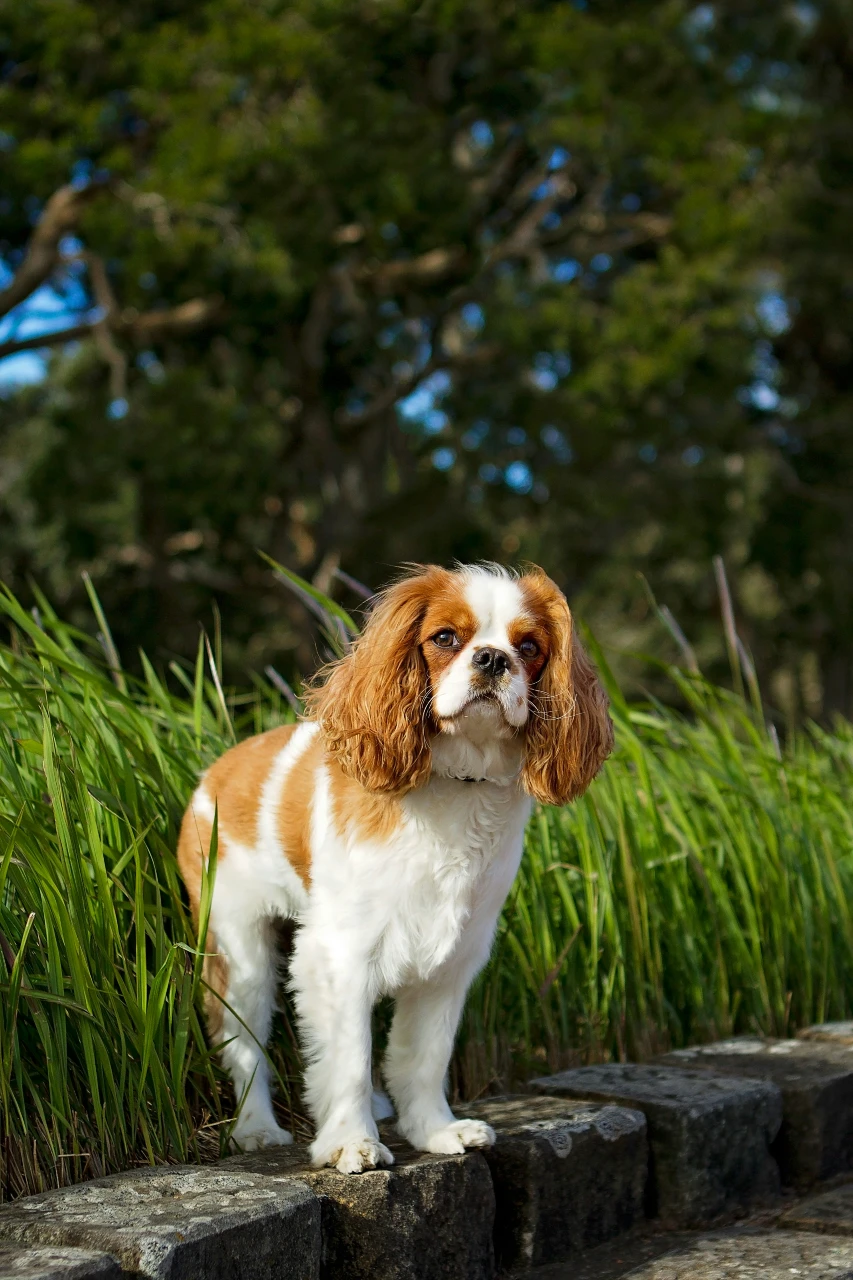
pet insurance - cavalier king charles spaniel standing next to tall grass

Cavalier King Charles Spaniel temperament

The word most Cavalier owners reach for is “devoted.” These are dogs that orient their entire world around the people they love. They follow you from room to room, curl up as close to you as physically possible, and seem to genuinely experience life more fully in your company than they ever do alone. It’s a rewarding quality in a companion, but it comes with practical considerations.

Here’s what to expect from life with a Cavalier:

  • Adaptable and versatile: One of the Cavalier’s greatest practical qualities is their flexibility. They adapt well to different living situations — a flat or a house, a quieter household or a busier one, provided they have sufficient company and daily exercise. They’re as happy going for a long country walk as they are curled up on the sofa, which makes them a genuinely good fit for a wide range of owners.
  • Gentle and good-natured: Cavaliers have a sweet temperament. They are rarely aggressive, rarely reactive, and tend to approach new people, children, and other animals with curiosity, rather than wariness. This makes them one of the most reliably gentle small breeds and an excellent choice for families. Their soft character also means they respond very poorly to harsh handling — patience and warmth bring out the very best in them.
  • Sensitive to mood and emotion: Cavaliers are emotionally-attuned dogs that pick up on the feelings of the people around them. This is part of why they are used so widely as therapy and emotional support dogs. It also means they find loud, stressful, or unpredictable environments unsettling. A calm, loving household suits them well. If your Cavalier seems to feel things particularly deeply, our guide to sensitive and expressive dogs will resonate.
  • Sociable with other animals: Cavaliers generally get on very well with other dogs and, with careful introduction, cats. They often benefit from canine company, because another dog can help ease the distress of being alone.
  • Deeply affectionate and people-focused: Cavaliers were bred to be companions, and every aspect of their character reflects that. They are warm, gentle, and physically demonstrative — these are dogs that want to be on your lap, or at the very least pressed against your leg. They thrive on human contact and don’t do well with extended periods of isolation. Separation anxiety is common in the breed, and it’s something to plan for if you work away from home.
  • Intelligent and trainable: Cavaliers learn quickly and are eager to please, which makes training a pleasure with this breed. They respond well to positive reinforcement and can achieve a great deal with patient, consistent guidance. They do share the spaniel’s tendency to follow their nose, so recall training from puppyhood and a securely-fenced garden are important.

Cavalier King Charles Spaniel care guide

The Cavalier’s silky, medium-length coat is beautiful and not especially demanding to maintain. But it does require consistent attention to stay tangle-free and healthy.

At home: Brush or comb three to four times a week. Pay particular attention to the areas most prone to matting: behind the ears, in the armpits, and around the collar. A fine-toothed metal comb works well for the feathering on ears and legs. Your dog’s coat can be an early indicator of wider health — changes in texture, condition, or shine are worth noting.

Bathing: Once a month is a reasonable guideline, using a shampoo suitable for silky coats. Finish with conditioner to keep the feathering soft and manageable.

Eyes: Check daily. Any discharge, redness, cloudiness, or sign of discomfort should be assessed promptly — given the Cavalier’s predisposition to dry eye, cherry eye, and other eye conditions, early attention matters. Our podcast episode on dog grooming with Lucia Carne is worth a listen for practical tips on establishing a grooming routine your dog actually enjoys.

Ears: Check and clean at least weekly. The combination of heavy, long ears and the breed’s love of outdoor exploration makes ear infections an ongoing risk. Keep the fur around the ear opening trimmed to help airflow.

Teeth: Establish a tooth-brushing routine from day one. Daily brushing is ideal; three times per week is the minimum. Given the Cavalier’s susceptibility to both dental disease and heart conditions, oral hygiene takes on extra importance for this breed.

Nails: Check monthly and trim as needed, or ask your groomer or vet.

Feed a complete, high-quality dog food appropriate to your Cavalier’s age and activity level. Because of the breed’s tendency to gain weight, portion control from the outset is important. Cavaliers will happily eat more than they need if given the opportunity.

Weigh portions accurately and account for training treats in the daily total. Our podcast episode on the benefits of natural dog food and treats is a helpful starting point if you’re thinking carefully about your Cavalier’s diet. Puppies typically need three meals a day; adults do well on two. Fresh water should always be freely available.

Despite their small size and reputation as lap dogs, Cavaliers are active dogs with real exercise needs. At least one hour of daily exercise is recommended, ideally split across two outings. They enjoy walks in interesting environments, sniffing, exploring, and — being spaniels at heart — following their noses.

Because of their hunting instinct and tendency to become absorbed in a scent, recall training should be established early and practised consistently. A securely-fenced garden is also sensible for the same reason.

As your Cavalier ages, and particularly if heart disease or syringomyelia is present, exercise should be tailored to their individual health and comfort level. For dogs with heart conditions, your vet or veterinary cardiologist will typically advise on appropriate activity levels. Mental stimulation is just as important as physical exercise — puzzle feeders, gentle games, and scent activities are all excellent for Cavaliers who may have limited capacity for vigorous walks.

Cavaliers are a genuine pleasure to train. They’re intelligent, attentive, motivated by praise and reward, and genuinely want to get things right. Positive reinforcement methods work well with this breed — they are sensitive dogs who respond beautifully to warmth and encouragement, and deflate noticeably under harsh treatment.

Start training early, keep sessions short and fun, and prioritise recall and socialisation from puppyhood. A well-socialised Cavalier is a confident, steady, and adaptable companion. Beyond basic obedience, many Cavaliers enjoy agility, obedience classes, and scent work, as these are activities that engage both their minds and their spaniel instincts.

pet insurance - cavalier king charles spaniel

We’re proud to hold an Excellent rating on Feefo, based on reviews from verified customers. Here’s what some of them have had to say about their experience with Muddy Paws.

  • Gold star service

    I received gold star service when my dog Riley needed surgery last year. Very friendly, no hassle service. Took the worry out of a stressful time.
    Michael
    ⭐️⭐️⭐️⭐️⭐️⭐️
  • Excellent service

    Excellent service, all enquiries followed up straight away. Great communication throughout the process.
    Kerri
    ⭐️⭐️⭐️⭐️⭐️
  • Protect your best friend

    Easy to apply online, fast and covers all the things you’ll need to protect your best friend
    David
    ⭐️⭐️⭐️⭐️⭐️

Frequently asked questions about Cavalier King Charles Spaniels and insurance

They are among the very best. Gentle, patient, adaptable, and deeply affectionate, Cavaliers are wonderful with children of all ages and suit a wide variety of households. They’re one of the most recommended breeds for first-time dog owners, older owners, and families alike — with the important caveat that their health needs require genuine commitment and, ideally, a robust insurance policy.

Yes, the Cavalier is one of the breeds with the most significant inherited health conditions in the UK. Mitral valve disease affects the vast majority of Cavaliers during their lifetime, and syringomyelia — a painful neurological condition — is also prevalent in the breed. Dry eye, ear infections, dental disease, and episodic falling syndrome are also seen regularly. This doesn’t prevent Cavaliers from living happy, comfortable lives, but it does make proactive health management and comprehensive insurance essential for responsible ownership.

As soon as you bring them home, ideally before their first vet visit, and before any health conditions have developed. Pre-existing conditions are typically excluded from insurance policies, so the earlier you insure, the greater your protection throughout your dog’s life.

A lifetime policy. The Cavalier’s most common conditions — mitral valve disease and syringomyelia — are progressive, lifelong conditions that require ongoing management over months and years. A time-limited policy, which only covers each condition for 12 months from when it first appears, will leave you without cover for the conditions you’re most likely to need it. A lifetime policy refreshes the vet fee limit annually and continues to cover conditions as they recur.

Premiums vary depending on your dog’s age, your location, and the level of cover you choose. The Cavalier’s known health profile means premiums may be higher than for some other small breeds. Getting a free quote from Muddy Paws takes only a few minutes.

From a reputable breeder who carries out the recommended health tests, expect to pay between £1,200 and £3,000 or more. Puppies that appear unusually cheap from breeders who cannot provide health test results should be approached with caution. Rehoming a Cavalier as a rescue is another option and typically costs £150–£400.

The Kennel Club recommends that both breeding dogs are: cardiac tested and free of murmurs under the Cavalier Health Heart Protocol; MRI screened for Chiari-like Malformation and Syringomyelia under the KC/BVA/CKCSC Scheme; and DNA tested for Episodic Falling Syndrome and Dry Eye/Curly Coat Syndrome. Always ask a breeder to show you evidence of all relevant health tests before committing to a puppy.

Life expectancy is typically 9–14 years, though this is affected significantly by the individual dog’s health, the quality of their care, and how early any conditions are detected and managed. Dogs from well health-tested lines, with proactive veterinary care, tend to live at the longer end of that range.

Not comfortably for extended periods. Cavaliers are companion dogs who live for human company, and separation anxiety is genuinely common in the breed. If you’re regularly away from home for several hours, a dog walker, daycare, or another companion dog is worth considering. Cavaliers left alone for long periods without adequate support often develop anxious behaviours.

Yes, their gentle temperament, trainability, and adaptability make them one of the more forgiving breeds for first-time owners. The important caveat is that their health needs require real engagement: regular vet check-ups, ideally annual cardiac monitoring from middle age, good dental hygiene, and a robust lifetime insurance policy. Owners who go in prepared will find the Cavalier a deeply rewarding companion.

Yes, moderately throughout the year. Regular brushing significantly reduces loose hair and keeps the coat in good condition. They are not considered a heavy shedding breed, but you will find hair on furniture and clothing.

Cavaliers come in four colours: Blenheim (chestnut and white — the most common), tricolour (black, white, and tan), black and tan, and ruby (solid, rich red). All four are equally recognised by the Kennel Club.

Yes. Vet fees for the diagnosis and treatment of conditions including heart disease are covered under Muddy Paws policies, provided the condition develops after the policy start date and the policy is renewed each year. Long-term medication, specialist cardiology referrals, and ongoing monitoring costs can all be claimed subject to your annual vet fee limit and policy terms. Please refer to your policy documentation for full details.

Syringomyelia is covered under Muddy Paws policies subject to the same terms: the condition must first present after the policy start date, and the policy must be renewed annually to maintain ongoing cover. This is one of the clearest illustrations of why taking out a lifetime policy before symptoms appear is so important for Cavalier owners.

Monthly payment is available, making it more straightforward to budget for your Cavalier’s insurance without a large upfront annual cost.

pet insurance - cavalier king charles spaniel stood on wooden floor

Ready to protect your Cavalier King Charles Spaniel?

pet insurance - cavalier king charles spaniel against a green background