English Bulldog Breed Information and Advice

Table of Contents

Few dogs command a room quite like an English Bulldog. Stocky, distinctive, and radiating a kind of unshakeable self-confidence, they have a presence that’s entirely their own. But spend five minutes with one and the tough exterior gives way to something altogether different: a gentle, affectionate companion who wants nothing more than to be close to the people they love.

It would be doing a disservice to prospective and current English Bulldog owners, however, not to address something important alongside all of that warmth: Bulldogs are one of the breeds with the most significant and well-documented health considerations. It’ is a compelling reason to’s why you should take pet insurance for English Bulldogs seriously from day one.

This guide covers everything you need to know about the breed: their history, personality, health vulnerabilities, care needs, and how Muddy Paws can help you protect your Bulldog throughout their life.


English Bulldog facts

The English Bulldog — also known simply as the British Bulldog — is one of the most recognisable dog breeds in the world, and one of the most distinctly British. Their history stretches back several centuries, with the breed originally developed for the now-banned practice of bull-baiting. When that sport was outlawed in 1835, Bulldog enthusiasts set about selectively breeding the dog for temperament rather than aggression, gradually producing the gentle, good-natured companion we know today — while retaining, and in many cases exaggerating, the distinctive physical features that had evolved over generations of selective breeding.

The Kennel Club classifies the English Bulldog within its Utility group, and the breed has been consistently popular in the UK for well over a century. They are also one of the most widely recognised symbols of British national identity.

It’s worth being clear on breed names: the English Bulldog is a distinct breed from the French Bulldog, the American Bulldog, and the Olde English Bulldogge. All of these share some ancestry, but are different breeds with different characteristics, health profiles, and insurance considerations. This guide covers the English Bulldog specifically.

Quick English Bulldog facts

  • Temperament: Gentle, loyal, affectionate, courageous, dignified
  • Lifespan: 8-10 years
  • Price: £1,500–£4,000+
  • Size: Medium; broad and stocky build
  • Height: 31–40cm
  • Weight: Males 23–25kg / Females 18–23kg
  • Coat: Short, smooth, fine
  • Colours: Brindle, fawn, red, white, piebald and combinations
  • Grooming: Low maintenance coat; daily skin fold care essential
  • Exercise needs: 20–40 minutes per day; low-to-moderate
  • Good with children? Yes — patient and gentle
  • Good with other pets? Generally, yes, with socialisation
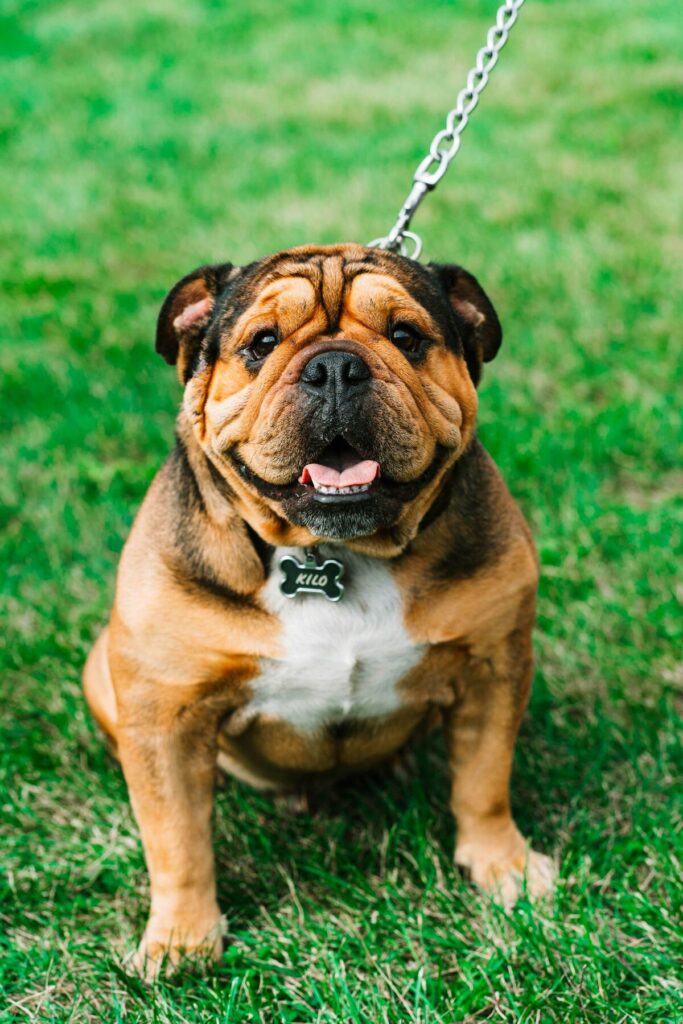
pet insurance - english bulldog on metal chain lead

pet insurance - english bulldog head rested on pillow

Why choose Muddy Paws for English Bulldog insurance?


The cost of owning a English Bulldog

  • Purchase price from a reputable breeder: £1,500–£4,000+
  • Initial vaccinations, microchipping, and neutering (if not done by breeder)
  • Beds, crate, leads, collar, grooming supplies, food bowls, and toys


Pet insurance is arguably the most significant financial decision you’ll make as a Bulldog owner. Preparing financially for the unexpected is sound advice for any pet owner, but for English Bulldog owners it’s particularly important.

The combination of BOAS (average claim ~£2,382), skin disease (average claim ~£1,131), dry eye, cherry eye (~£1,383), and joint conditions means many Bulldogs will accumulate several thousand pounds in veterinary costs in their lifetime — often well before they reach old age. And because many of these conditions are chronic and recurring, they need to continue being covered year after year.

Common health conditions in English Bulldogs

This is the condition most closely associated with the English Bulldog — and arguably the most serious. Brachycephalic means “short-headed,” and the anatomical features bred into English Bulldogs over generations (the flat face, compressed skull, shortened muzzle, and narrowed nostrils) create a range of structural airway problems collectively known as BOAS.

These include stenotic nares (narrowed nostrils that restrict airflow), an elongated soft palate (which partially obstructs the throat), a hypoplastic trachea (a windpipe that is abnormally narrow), and everted laryngeal saccules (soft tissue that can be pulled into the airway). Many Bulldogs have several of these issues simultaneously.

The practical result ranges from noisy breathing and reduced exercise tolerance through to significant respiratory distress. In moderate to severe cases, surgical intervention is required, typically involving widening the nostrils and shortening the soft palate. This surgery can significantly improve quality of life, but it comes with costs and risks.

According to claims data, BOAS treatment carries an average claim cost of around £2,382. More complex cases, or those requiring specialist referral, can cost considerably more.

BOAS also makes English Bulldogs dangerously vulnerable to heatstroke. A dog that cannot breathe efficiently cannot cool itself properly, and even moderate heat can rapidly become life-threatening. This is not something to take lightly — hot cars, enclosed spaces, and exercise in warm weather are all risks.

Skin problems are the most frequently claimed-for condition in English Bulldogs. The breed is highly prone to hypersensitivity (allergic) skin disorders, which can be triggered by environmental allergens including pollen, dust mites, and grass, or by food ingredients. The condition typically presents as persistent itching, redness, recurrent skin infections, and in Bulldogs specifically, irritation in and around skin folds.

Atopy — chronic allergic skin disease — requires ongoing management. Treatment may include prescription medication, specialist veterinary dermatology input, and in some cases changes to diet. Pet insurance can make a material difference to managing the long-term costs of allergic skin disease. Average claims data puts skin disease at around £1,131 per claim — but for a condition requiring repeat treatment over months and years, the cumulative cost is considerably higher. Our guide on how to prevent and treat allergies in pets explains the signs to watch for and the options available.

Separate from general allergic skin diseases, English Bulldogs are prone to dermatitis specifically within their skin folds — the wrinkles around the face, nose, tail, and body. Trapped moisture, warmth, and friction in these folds create ideal conditions for bacterial and yeast infections. Affected skin becomes sore, red, and smelly.

Prevention through regular cleaning and careful grooming of the folds is essential. When infections develop, they require prompt veterinary treatment. In some dogs with severe fold anatomy, surgical correction may be recommended.

Keratoconjunctivitis Sicca (KCS or dry eye) is the second most frequently claimed-for condition in Bulldogs. It occurs when the tear glands don’t produce sufficient moisture to keep the eye lubricated. Without adequate tear production, the surface of the eye becomes chronically irritated, prone to infection, and — if untreated — can suffer serious corneal damage. Management is typically with daily eye drops or ointments, and in many dogs this becomes a lifelong requirement.

Cherry eye — formally known as prolapse of the nictitans gland — is also seen regularly in the breed. The gland of the third eyelid prolapses outward, producing a red, fleshy swelling in the corner of the eye. It can occur in one or both eyes, and treatment is surgical. Average claims for cherry eye sit at around £1,383. Left untreated, cherry eye can contribute to dry eye and other ocular complications.

Additional eye conditions, including entropion (where the eyelid rolls inward, causing the lashes to rub against the eye surface) are also seen in English Bulldogs.

Despite their stocky, low-slung build, English Bulldogs are susceptible to hip dysplasia (abnormal development of the hip joint that leads to instability, pain, and eventual arthritis). The breed’s weight and conformation place considerable strain on the joints throughout their life, and pelvic limb problems feature in the top-five claimed conditions for the breed.

Elbow dysplasia is also possible. Both conditions can be managed conservatively with pain relief and physiotherapy in mild cases, but more severe cases may require surgery. Arthritis developing as a secondary consequence is a common long-term management requirement.

English Bulldogs are prone to developing cysts or abscesses between their toes (interdigital cysts or furuncles). These can be painful, cause limping, and tend to recur. Management typically involves cleaning, topical treatment, and sometimes antibiotics. Recurrent cases may require investigation into underlying causes such as skin allergies or anatomical conformation.

English Bulldogs have a higher incidence of certain congenital heart conditions compared to many other breeds. Pulmonic stenosis (a narrowing of the pulmonary valve) and ventricular septal defects can be present from birth. A cardiac check is recommended as part of health testing for breeding dogs.

Heatstroke deserves its own entry here because it is not just a health risk, but an emergency which kills Bulldogs every year. Because of their compromised airways, English Bulldogs overheat far more quickly than most breeds and cannot effectively pant to cool themselves. Even short exposure to high temperatures — in a car, a warm room, or on a hot day — can cause a rapid and life-threatening rise in body temperature.

Every English Bulldog owner should know the signs of heatstroke (excessive panting, distress, drooling, collapse) and understand that it requires immediate emergency veterinary treatment. Prevention — keeping your Bulldog cool, well-hydrated, and out of the heat — is far more effective than any treatment.

The English Bulldog’s compressed jaw means their teeth are crowded into a smaller-than-normal space. This makes dental hygiene particularly important and also more difficult to maintain. Overcrowding leads to accelerated tartar build-up, gum disease, and tooth decay. Regular tooth brushing from puppyhood and routine dental checks are essential. Dental disease can contribute to wider systemic health problems if left unaddressed.

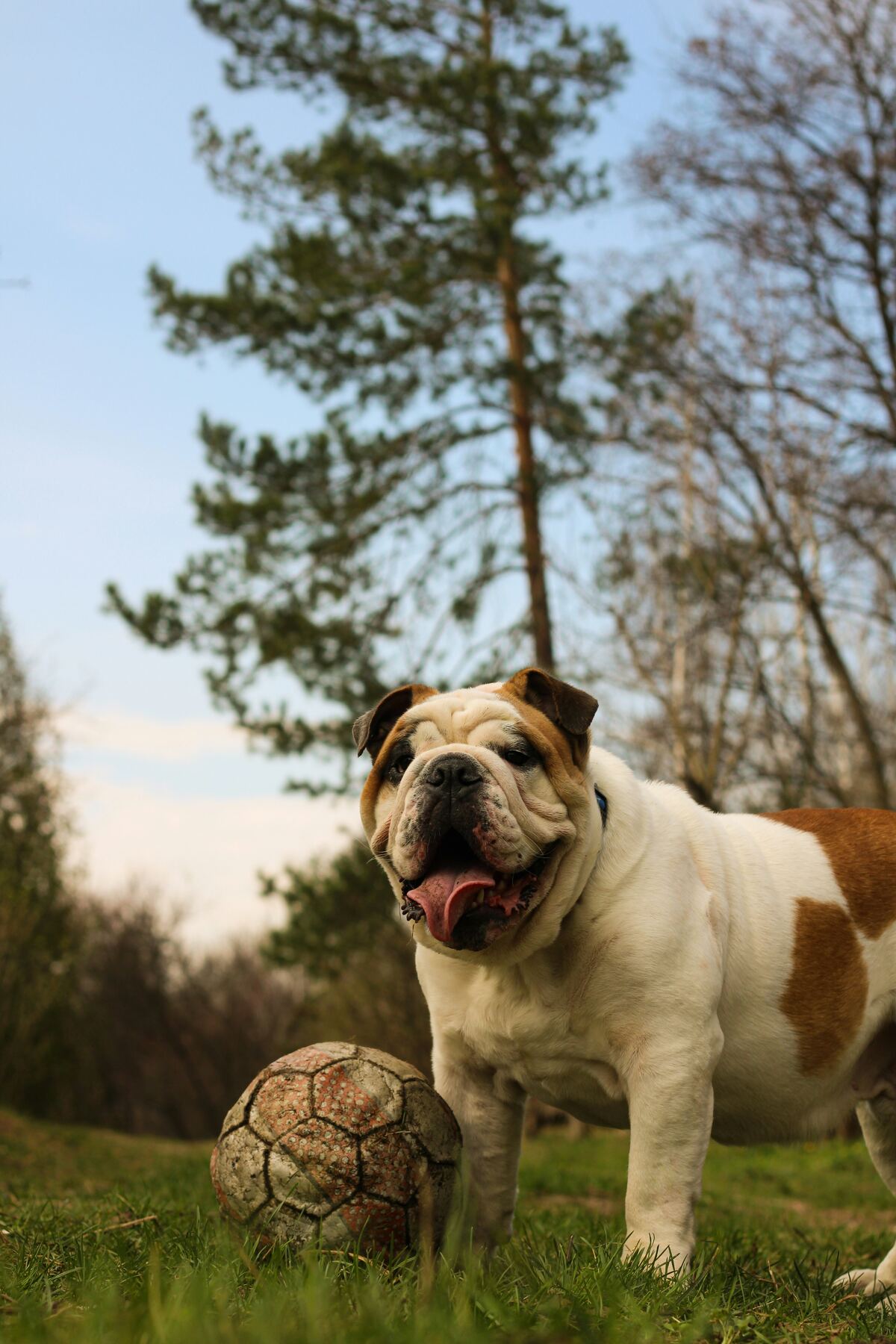
pet insurance - english bulldog with a football in the park

English Bulldog temperament

Many Bulldog owners will admit their dog looks fierce, but acts like a lapdog. These are some of the most affectionate, people-oriented dogs you will ever meet. Their wrinkled brow gives them a permanently world-weary expression, but it masks a warm, sociable, and frequently very funny personality.

Here’s what you can expect from life with an English Bulldog:

  • Gentle and affectionate: English Bulldogs adore human company. They bond deeply with their families and have a particular fondness for physical closeness — expect them on the sofa, in your personal space, and quite possibly trying to sit on you. Their gentleness with children is one of their most celebrated qualities, too. Bulldogs are patient, tolerant, and sweet-natured around kids, which makes them excellent family dogs.
  • Calm and easygoing: English Bulldogs are not highly driven or energetic dogs. They are content with modest daily exercise, happy to spend most of the day resting and are generally unfazed by the hustle and bustle of a busy household. This makes them a good match for less active owners or people with smaller homes and gardens — though it also means their tendency to gain weight needs careful management.
  • Loyal and devoted: Bulldogs form strong attachments to their people. They are sensitive to the mood of their household and like to be where the action is. Separation anxiety can be a genuine concern: Bulldogs left alone for long periods regularly can develop anxious behaviours, so it’s worth thinking through your routine before getting one.
  • Stubborn and independent-minded: There is no getting around this one; English Bulldogs are not the most biddable of dogs. They’re intelligent enough to understand what you’re asking — they simply weigh up whether it’s worth their while. Treat-based training works well, but you’ll need patience and consistency. They don’t respond at all to harsh handling, with a firm but cheerful persistence being the approach that works.
  • Alert but not vocal: Despite their reputation, English Bulldogs aren’t typically excessive barkers. They’ll announce something unusual, but they’re not a nuisance. Their low-key approach to most things extends to their general noise levels.
  • Sensitive to heat and cold: Because of their flat faces and compressed airways, English Bulldogs are very poor at regulating their body temperature, particularly in warm or humid conditions. Hot weather is a genuine safety concern: this isn’t a breed you exercise in the middle of a summer afternoon.

English Bulldog care guide

The English Bulldog’s short, smooth coat is low maintenance in the traditional sense — they don’t need clipping or elaborate brushing. However, their skin folds require daily attention that many prospective owners underestimate.

Coat: Brush once or twice a week with a soft bristle brush or grooming glove to remove dead hair and keep the coat looking healthy. Your dog’s coat condition can also signal underlying health issues, so it’s worth noting any changes in texture or appearance.

Skin folds: Clean daily with a damp cloth or specialist pet wipe, making sure to dry thoroughly afterwards. Moisture left in the folds creates ideal conditions for bacterial and yeast infections. Pay particular attention to the nose roll (the wrinkle directly above the nose), facial folds, body folds, and the tail pocket if your Bulldog has one.

Ears: Check and clean weekly. Bulldogs’ ear canals can be narrow, making them prone to wax build-up and infections.

Eyes: Check daily. Any discharge, redness, cloudiness, or swelling around the eyes should be assessed by a vet promptly — given the breed’s predisposition to dry eye and cherry eye, early intervention matters.

Tail: If your Bulldog has a tight screw tail with a tail pocket underneath, this area needs cleaning daily, just like the facial folds.

Teeth: Brush regularly from puppyhood. The Bulldog’s crowded jaw makes dental hygiene a higher priority than for many breeds.

Nails: Trim regularly or have your vet or groomer do this. Bulldogs’ low activity levels mean their nails don’t wear down naturally as quickly as more active breeds.

English Bulldogs are highly food-motivated, which makes training easier, but also means they will eat more than is good for them if given the chance. Obesity is a serious health risk in the breed, placing additional strain on already-compromised airways and predisposed joints. Strict portion control throughout their life is essential.

Feed a high-quality complete dog food appropriate to your Bulldog’s age and life stage. Weigh portions accurately using the guidelines on the packaging, factor training treats into the daily caloric total, and resist those soulful eyes looking for extra food. Our podcast episode on the benefits of natural dog treats and food is worth a listen if you’re thinking carefully about what to feed your Bulldog.

Puppies typically need feeding three to four times a day; adults do well on two meals. Fresh water should always be freely available — hydration is particularly important for a breed prone to overheating.

English Bulldogs need far less exercise than most medium-sized breeds (around 20 to 40 minutes of gentle activity per day, ideally split into two short outings). This suits many owners, but it’s important to understand that “less exercise” doesn’t mean “no exercise.” Regular gentle movement is important for maintaining a healthy weight and joint health, and Bulldogs who are never exercised tend to pile on weight quickly.

Also, never exercise your Bulldog in hot weather. In warm conditions, even a short walk can be dangerous. Exercise should be limited to the cooler parts of the day — early morning and late evening — during spring, summer, and any warm autumn days. Watch constantly for signs of breathing difficulty or overheating.

And, exercise should be age- and health-appropriate. Bulldogs with BOAS or joint problems may need shorter, more gentle activity than a healthy adult. Always follow your vet’s guidance on exercise levels, particularly if your dog has had any respiratory or orthopaedic treatment.

Mental stimulation is just as important as physical exercise for keeping Bulldogs contented — gentle interactive games, puzzle feeders, and calm scent activities can all provide engagement without physical strain.

English Bulldogs can be trained, but they require patience and a different approach from more biddable breeds. They are independent thinkers who respond best to positive reinforcement with high-value treats. Positive, reward-based training works; anything that relies on force or harsh correction does not and will cause a Bulldog to dig in their heels further.

Start training early and keep sessions short (Bulldogs don’t have long attention spans for formal work), fun, and consistent. Basic obedience, lead manners, and calm behaviour around visitors are all achievable with a patient approach.

Early socialisation is important. Well-socialised Bulldogs are typically confident and good-natured with strangers, other dogs, and children. Bulldogs that haven’t been properly socialised as puppies can be wary or reactive in novel situations.

Because physical exercise is limited for this breed, mental stimulation takes on added importance. Puzzle feeders, gentle scent games, and short training sessions can all provide valuable engagement and help prevent boredom.

pet insurance - english bulldog sat down on kitchen floor

We’re proud to hold an Excellent rating on Feefo, based on reviews from verified customers. Here’s what some of them have had to say about their experience with Muddy Paws.

  • Gold star service

    I received gold star service when my dog Riley needed surgery last year. Very friendly, no hassle service. Took the worry out of a stressful time.
    Michael
    ⭐️⭐️⭐️⭐️⭐️⭐️
  • Quick and efficient

    Quick and efficient. I was informed of when they received the claim and how long it would take. The payment came through swiftly. They liaised fully with the vet so I didn’t have to do anything.
    Verified Feefo Customer
    ⭐️⭐️⭐️⭐️⭐️
  • So straightforward

    I insured my puppy with Muddy Paws as soon as I got him — he was 8 weeks old. Like all puppies we soon had some issues which could have been serious but happily turned out to be ok. We have made a claim and the whole process was so straightforward.
    Verified Feefo Customer
    ⭐️⭐️⭐️⭐️⭐️

Frequently asked questions about English Bulldogs and insurance

With the right household, they can be wonderful. Gentle, tolerant, affectionate, and calm, they suit families with children and tend to get on well with other pets when properly socialised. The caveats are their health needs (which require time and financial commitment) and their sensitivity to heat, which limits outdoor activities in warmer months.

English Bulldogs are one of the breeds with the most significant health considerations, largely as a result of the physical characteristics that define their appearance. BOAS, skin disorders, dry eye, cherry eye, joint problems, and dental disease are all common in the breed, and many of these require ongoing management throughout the dog’s life. This doesn’t mean you can’t have a wonderful life with an English Bulldog — many owners do — but going in fully informed is essential.

As soon as possible, ideally the moment you bring your puppy home and before any health conditions have a chance to develop. Conditions that exist before your policy starts are typically excluded as pre-existing. Given how early some Bulldog conditions can emerge, the earlier you insure, the better protected you’re likely to be.

A lifetime policy is the clear recommendation for this breed. English Bulldogs’ most common health conditions — BOAS, allergic skin disease, dry eye — are chronic and recurring, meaning a time-limited policy that only covers each condition for 12 months will leave you without cover for exactly the conditions your dog is most likely to have. A lifetime policy refreshes annually and continues to cover ongoing conditions year after year.

Premiums vary based on your dog’s age, your location, and the level of cover you choose. English Bulldogs typically attract higher premiums than many other breeds because of their well-documented health profile. Getting a free quote from Muddy Paws takes only a few minutes.

From a reputable breeder, expect to pay between £1,500 and £4,000 or more. Be wary of unusually low prices — well-bred English Bulldogs from health-focused breeders are expensive because responsible breeding practices carry real costs. Never buy a puppy without meeting the mother in person and asking to see health test results.

The Kennel Club recommends that English Bulldog breeding dogs are assessed for BOAS (via a breathing assessment), hip scoring, and cardiac testing. Any responsible breeder should be happy to discuss their health testing programme and share results.

With careful management, yes, but heat is a serious and ongoing concern. English Bulldogs cannot regulate their body temperature efficiently due to their compressed airways, making heatstroke a genuine risk, even in mild warmth. In summer, exercise should be restricted to early mornings and evenings, homes should be kept cool, and your Bulldog should never be left in a car. Always have fresh water available and watch for any signs of distress in warm conditions.

Yes, they have a well-deserved reputation for patience and gentleness around children. Their calm, affectionate temperament makes them well-suited to family life. As always, interactions between dogs and very young children should be supervised.

Not happily for extended periods. English Bulldogs are people-centred dogs and can develop separation anxiety when left alone regularly. If you work away from home full-time, a dog walker, daycare, or companion animal is worth planning for.

They can be challenging due to their independent nature and selective compliance. Short sessions using high-value treats and patient, consistent positive reinforcement get the best results. Harsh correction or force doesn’t work with this breed. Starting training early and keeping it enjoyable makes a real difference.

Most of them, yes. And often quite loudly. Due to their compressed airway anatomy, some snoring is normal for the breed. Changes in snoring pattern, laboured breathing, or obvious respiratory distress should always be checked by a vet.

Yes. Vet fees for the diagnosis and treatment of conditions including BOAS surgery are covered under Muddy Paws policies, subject to your annual vet fee limit and policy terms, provided the condition develops after your policy start date. Please refer to your policy documentation for full details.

It can be. English Bulldogs’ known health profile means they are statistically higher risk to insure, and premiums may be higher than for healthier breeds. This is precisely why taking out cover early — before any conditions develop — is so important, and why choosing a lifetime policy that continues to cover conditions as they recur is typically the most cost-effective choice over the course of the dog’s life.

pet insurance - english bulldog laying on sofa

Ready to protect your English Bulldog?

pet insurance - english bulldog laying on wooden park bench