The Ultimate Guide To Puppies: Feeding, Training, Weight & Exercise (0–12 Months)
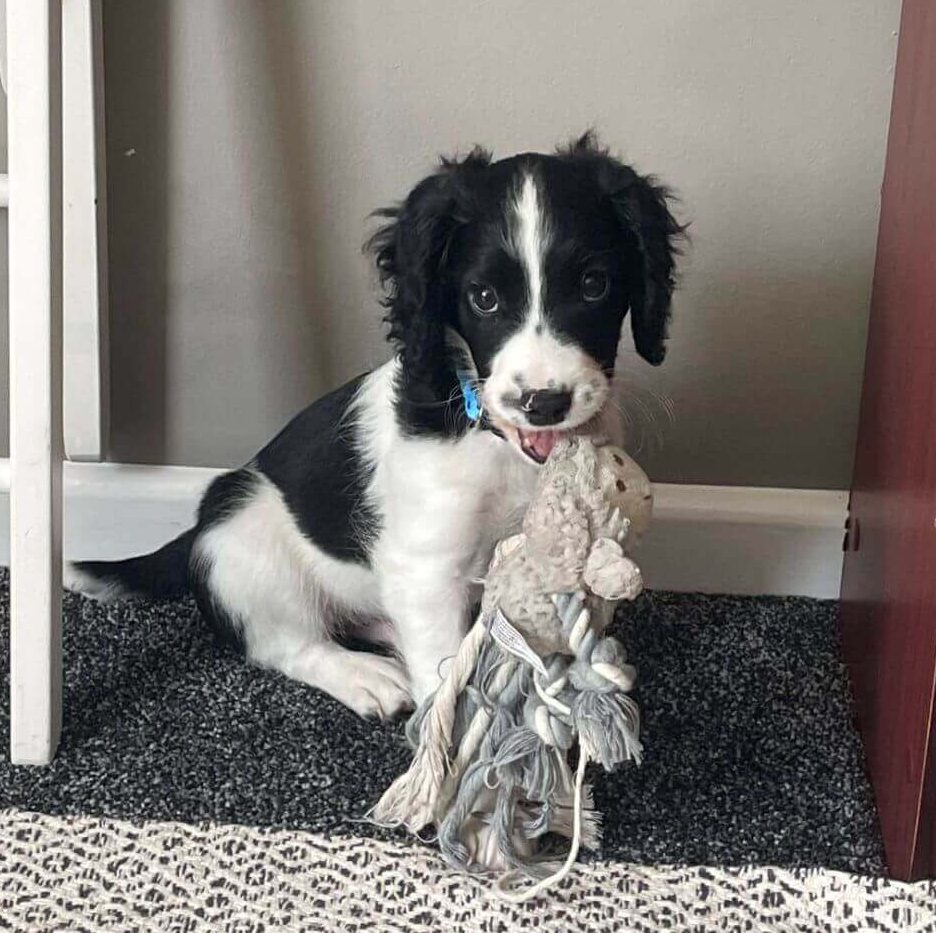
Phase 1: The First 2 Weeks to 1 Month at Home (The crazy part)
The first 30 days in a new home are a whirlwind of transition. Don’t worry about teaching your puppy any tricks yet, this period is for setting predictable, foundational routines and supporting rapid early growth.
The Feeding Guide for 2 weeks to 1 month old Puppies: Initial Arrival
At 8 to 12 weeks old, your puppy requires 4 evenly spaced meals per day (e.g., 7:00 AM, 11:30 AM, 4:00 PM, and 7:30 PM) This stabilises blood sugar levels and prevents hypoglycemia, particularly in toy and small breeds.
For the first 14 days at home, feed your puppy the exact food brand and formula provided by the breeder or shelter. Sudden diet changes combined with relocation stress cause severe gastrointestinal (GI) upset and diarrhoea, which both you and your carpet, do NOT want.
If your puppy does happen to develop mild loose stool during the first week, hold off on giving commercial, store-brought treats. Use a portion of their daily kibble allowance as training rewards instead.
Keeping your Puppy’s water intake in check
Always provide fresh water alongside meal times. If using dry kibble, soak it in warm water for 10 minutes to soften it for young baby teeth and aid digestion.
You can follow the table below for advice on switching your puppy’s food:
|
Days 15-17
|
Days 18-20
|
Days 21-23
|
Day 24+ |
|---|---|---|---|
|
75% Old 25% New |
50% Old 50% New |
25% Old 75% New |
100% New Food |
Early Puppy Training Guide: Mastering the Basics
During the first month at home, keep training sessions short (2 to 3 minutes at a time) and make sure to focus on three essential foundations: Potty Training, Crate Security, and Bite Inhibition (more information on these below).
The Potty Training Rhythm
Puppies at 8–12 weeks have minimal bladder control and need to go outside every 30 to 60 minutes while awake. Follow our ‘potty’ rule, to avoid accidents and teach your puppy to go to toilet outside:
The Potty Rule: Take your puppy to their designated toilet spot immediately after eating, drinking, sleeping, or playing.
- Stand quietly in the designated area without playing.
- The moment they go, wait until they finish, then offer high-value praise and a treat within 2 seconds.
- Do not make the mistake of punishing accidents inside; simply clean the area with an enzymatic cleaner to remove lingering scent markers.
Crate Training & Night One Success
A crate replicates a natural den and aids potty training. Place the crate near your bed for the first few nights so your pup can hear and smell you.
- Feed meals inside the open crate during the day to create positive associations.
- Do not use the crate as a form of punishment – this should be their safe space!
How to Train a Biting Puppy
Puppies explore the world with their mouths and have needle-sharp teeth. When your puppy nips skin:
- Emit a calm, clear “Ah-ah!” or freeze completely to stop the game.
- Immediately swap your hand or clothing for an appropriate chew toy.
- Praise them the second their teeth touch the toy instead.
Vaccination Timeline & Safe Socialisation
A common dilemma for new owners is balancing disease prevention (keeping paws off infected ground) with the critical socialisation window, which begins closing between 12 and 16 weeks of age.
Typical UK Vaccination Schedule
- First Vaccination (8–10 Weeks): Core protection against Parvovirus, Distemper, Leptospirosis, and Infectious Hepatitis.
- Second Vaccination (10–12 Weeks): Booster shot given 2 to 4 weeks after the first dose.
- Full Clearance: Safe to walk on public ground typically 1 to 2 weeks after the second vaccination (confirm the exact timeframe with your vet).
How to Socialise Safely Before Full Vaccination (“Paws-Off-Ground”)
Socialisation is about creating habits; you want to teach your puppy that novel sights, sounds, and environments are safe and isn’t just about greeting other dogs. Here are some easy ways you can do this before your puppy is able to experience their first ‘walkies’:
Use a Puppy Carrier or Sling
Carry your puppy through busy high streets, near train stations, and past traffic so they absorb sight and noise stimuli safely from your arms.
Sound Desensitisation
Play audio tracks of fireworks, sirens, and thunderstorms at a low volume during meal times indoors, gradually increasing the volume over several weeks.
Controlled Human Encounters
Invite visitors of different ages and appearances (wearing hats, glasses, high-vis jackets) into your home to greet your puppy calmly, so they don’t associate unfamiliar clothing with being a threat.
Early weight guide: Monitoring Health & Growth
The Rib Test
Place your thumbs on your puppy’s spine and spread your fingers across their ribcage. You should easily feel their ribs under a thin layer of fat, but the ribs should not be visibly protruding.
Red Flags for Weight Loss
Young puppies have zero fat reserves. Stress-induced anorexia, parasites (like roundworms), or dehydration can become life-threatening within 24 to 48 hours. If your puppy loses weight or refuses food for more than two consecutive meals, contact your vet immediately.
What Exercise Is Needed at This Age?
Puppies aged 8 to 12 weeks do not need formal street walks. Their growth plates are soft and vulnerable to impact damage. Exercise should consist entirely of short, indoor play sessions and garden exploration.
Additional Exercise Safety Guidelines (for the nervous dog owners)
- Keep active play sessions under 10–15 minutes before offering a quiet nap zone.
- Put a light harness on your puppy indoors for 10 minutes a day, letting them trail a lightweight leash behind them so they get used to the feeling without tension.
- prevent your puppy from jumping off sofas, running down stairs, or sliding across slick hardwood floors, which can cause micro-tears in developing joints.

Phase 2: Months 3 to 6 (The Foundation & Rapid Growth Stage)
Between 12 and 24 weeks, your puppy enters its most explosive physical growth spurt. With full vaccination clearance usually complete by month 3, the world opens up—bringing both exciting milestones (first real walks) and new challenges (adult teething and boundary testing).
The Feeding Guide for 2 weeks to 1 month old Puppies: Initial Arrival
At 12 weeks (3 months) old, transition your puppy from 4 meals down to 3 meals per day. Puppies in this age window require roughly double the energy (calories) per pound of body weight compared to adult dogs to support rapid bone and muscle development.
Key Nutritional Priorities for Months 3–6 (Make sure to read these!)
The 10% Treat Rule
As training intensifies, food rewards add up quickly. High-value training treats must account for no more than 10% of your puppy’s daily caloric intake. Subtract equivalent calories from their main kibble allowance to avoid early weight spikes – this is mostly not too much of an issue, unless you have a breed that is prone to excess weight gain, such as Pugs, Labradors and Dachshunds, for example.
Calcium & Phosphorus Ratios
Large and giant breed puppies (e.g., Labradors, German Shepherds, Great Danes) need specialised Large Breed Puppy kibble. Excess calcium or calories during this phase can cause bones to grow too fast, leading to painful joint disorders like hip dysplasia.
Managing Appetite Spikes Correctly
Growth spurts trigger sudden increases in hunger. If your puppy is constantly searching for food, check your chosen puppy food brand’s feeding chart—their rapidly increasing weight means their daily portion size needs to adjust upward weekly.
Here’s a rough meal plan we’d recommend:
|
Breakfast
(7:00 – 8:00 am) |
Lunch
(12:00 – 1:00 PM) |
Dinner
(5:30 – 6:30 PM) |
|---|---|---|
|
33% Daily Portion |
33% Daily Portion |
33% Daily Portion |
3-6 month Puppy Weight Guide: Managing the Peak Growth Spurt
Between 3 and 6 months, small breeds reach roughly 65% to 75% of their adult weight, while large breeds reach 50% of their adult weight. You can find out the average weight of an adult for your breed by making a quick Google search and calculating this.
The Visual & Physical Weight Assessment
If their weight doesn’t match up where it should be – don’t panic! Dogs can often be smaller or larger for their breed, based on a wide range of variables. The best thing to do is carry out a visual and physical weight assessment, which we’ve provided instructions for, below.
The Rib Feel Test: Run your hands gently down their sides. You should feel individual ribs easily under a layer of short fur—similar to feeling the knuckles on the back of your hand when held flat.
The Overhead View (The Waist Tuck): Look down at your puppy from above. You should see a clear “hourglass” inward tuck behind the ribcage before the hips.
The Side View (Tummy Tuck): View your puppy from the side. The abdomen should tuck upward from the bottom of the chest to the hind legs.
3-6 Month Puppy Training Guide: Obedience, Impulse Control & Teething
Months 3 to 6 are all about teaching your puppy self-control and strengthening your bond outdoors.
Managing the Teething Surge (Months 4–6)
Around month 4, milk teeth fall out rapidly as 42 permanent adult teeth cut through the gums.
An easy solution is freeze damp washcloths soaked in low-sodium dog broth, or offer rubber chews filled with frozen mashed pumpkin. Cold textures soothe inflamed gums and keep teeth off your furniture – your local pet shop should have plenty of these!
Mastering The two Most High-Priority Life Skills (Don’t skip these)
2. The “Leave It” Command: Teach your pup to ignore hazards (dropped medication, street litter). Hold a piece of kibble in a closed fist; when they stop sniffing your hand and pull back, mark the behavior with a “Yes!” and reward them with a different high-value treat from your other hand.
1. Emergency Recall (“Come”): Never use recall to end fun (e.g., calling them only to clip the leash and go home). Pair your recall word with a high-value treat (cooked chicken or liver paste) and reward them lavishly every single time they return.
Puppy Walking Guide & Exercise Rules (3–6 Months)
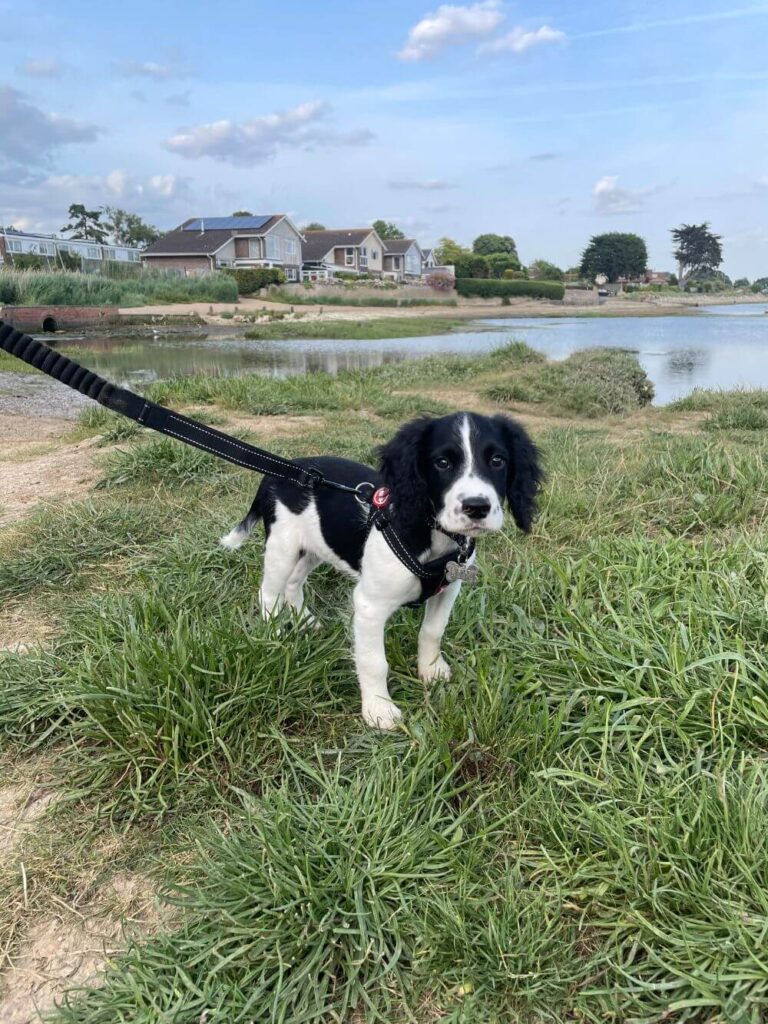
The standard, universal rule for puppy exercise is 5 minutes of structured walking per month of age, up to twice per day. A 3-month-old puppy needs a 15-minute walk, while a 5-month-old puppy can comfortably handle a 25-minute walk.

Phase 3: Months 6 to 12 (Adolescence & Transition to Adulthood)
Welcome to the “teenage” phase! Between 6 and 12 months, your puppy undergoes significant hormonal shifts, brain remodelling, and a physical transition from clumsy pup to a defiant young adult. This stage often brings “teenage rebellion” and training regression, but with the right adjustments to nutrition, exercise, and training, you can counter this without coming to blows with your pup and build a reliable, well-adjusted companion.
Feeding Guide for Puppies: Months 6 to 12
At 6 months old, reduce your puppy’s feeding frequency from 3 meals down to 2 meals per day (morning and evening). While total calorie needs remain high, your puppy’s physical growth rate begins to slow down, making portion control crucial to prevent adolescent obesity.
When to Switch from Puppy Food to Adult Food:
Different breed sizes mature at vastly different rates. Transitioning to adult food too early deprives large breeds of critical joint support, while switching too late can cause excess weight gain in small breeds. We’d recommend checking for your specific breed, however you can use the below as a guideline:
🐕🦺 Giant Breeds (45kg+ adult weight): Switch to adult food at 18 to 24 months.
🐩 Small Breeds (under 10kg adult weight): Switch to adult food at 9 to 12 months.
🐕 Medium Breeds (10–25kg adult weight): Switch to adult food at 12 to 14 months.
🦮 Large Breeds (25–45kg adult weight): Switch to adult food at 12 to 18 months.
A really simple example of how we time our dogs daily meals, is:
Daily Meal Shift (6 to 12 Months)
|
Morning Meal
(7:00 AM – 8:30 AM) |
Evening Meal |
|---|---|
|
50% Daily Food Allowance |
50% Daily Food Allowance |
Teenage Puppy (6-12+ months) Weight Guide: Growth Tapering & Lean Muscle Building
For a more specific weight percentage per breed, use this helpful table:
Adult Weight Timeline by Breed Size
|
Breed Category |
% Adult Weight at 6 Months |
Full Maturity Reached |
|
Toy & Small Breeds |
80% – 90% |
9 – 12 Months |
|
Medium |
70% – 80% |
12 Months |
|
Large |
60% – 70% |
15 – 18 Months |
|
Giant |
50% – 60% |
24 Months |
Maintaining an Adolescent Body Condition Score (BCS):
Adolescent dogs often go through a “lanky” or uneven growth phase. Resist the urge to overfeed them to make them look broader.
- Aim to keep them at a strict Body Condition Score of 4/9 or 5/9 (use this helpful BSC infographic from RoyalCanin), t’s very common for adolescent dogs to look a bit gangly, but as always, refer to your vet’s specific advice for your dog.
- Carrying extra weight on soft, developing joints during adolescence drastically increases the risk of early-onset osteoarthritis and cruciate ligament tears, so make sure to do your best to avoid this.
Our guide to training an Adolescent Puppy: Overcoming Regression
Key Adolescent Training Priorities (in order of importance):
1. Proofing Recall with Distractions
Adolescent hormones bring a heightened drive to explore, making environmental scents far more enticing than your voice.
Re-attach a 10-meter long-line leash in public spaces.
Upgrade your reward hierarchy: swap standard kibble for high-value rewards (like real meat or squeeze-tube cheese) when practicing recall around other dogs or wildlife.
2. Impulse Control at Thresholds
Enforce calm discipline before high-arousal activities. Require your adolescent pup to “Sit and Wait” politely before opening the front door, putting on their harness, or releasing them to eat their meal.
3. Managing the Secondary Fear Period
Between 6 and 14 months, your dog may experience a sudden “secondary fear phase,” which will include barking at familiar objects (like trash cans, hats, or bicycles).
It is crucial that you do not force them to approach. Praise calm behaviour from a safe distance, toss high-value treats on the ground, and allow them to explore at their own pace.
Adolescent Puppy Walking Guide & Exercise Rules (6–12 Months)
However, high-impact activities like running, jogging, or agility should still be avoided until growth plates are fully closed.
Understanding Growth Plate Closure
A growth plate is a region of soft cartilage at the end of long bones that hardens into solid bone as a dog matures. For small breeds, these growth plates close at around 10 to 12 months old, whilst in larger breeds it is as late as 14 to 18 months (or 24 months for giant breeds).
Our Golden Rule: Never take your dog forced road running, jogging, or biking alongside you until your veterinarian takes an X-ray or confirms that their growth plates have fully fused.
To get a better idea of what you can and can’t do with your puppy at this age, please review our breakdown below:
Exercise & Activity Breakdown (6–12 Months)
|
Age in Months |
Single Walk Duration |
Max Daily Exercise |
Safe Activities |
|
6-8 Months |
30-40 Minutes |
60-80 Mins (split 2x) |
Off-leash long-line work, gentle swimming |
|
8-10 Months |
40-50 Minutes |
80-100 Mins (split 2x) |
Structured hikes on soft ground, scentwork |
|
10-12 Months |
50-60 Minutes |
100-120 Mins (split 2x) |
Social group walks, advanced enrichment |
Our final takeaway: Enjoy the Journey!
Raising a puppy is a wild, incredibly rewarding ride. With consistency, patience, and the right routines, you’re well on your way to raising a happy, confident dog for life.
Protect Your Pup with Muddy Paws Insurance
As you navigate training and growth spurts, don’t forget to protect your companion when the unexpected happens. Puppies are naturally curious—and whether it’s a swallowed sock or a sudden tummy bug, vet visits can add up quickly.
Muddy Paws Insurance offers flexible, comprehensive coverage tailored for active pups. From emergency vet care to sudden illness, locking in insurance early ensures your puppy is covered before pre-existing conditions arise—giving you total peace of mind.
If this sounds like something you’d be interested in for your new (or existing) furry family member, you can get your instant quote with Muddy Paws Insurance today here and keep your pup protected from day one!